

Moving between the photographic and the abstract, the familiar and the unfamiliar, SGIFF Undercurrent’s Double Bill brings together works by video artist-filmmakers Filipino Shireen Seno and German Nicolaas Schmidt. Though distinct in their formal approaches, both films explore the peculiar ways in which images linger in our minds, inviting questions about our relationship with memory and the everyday.
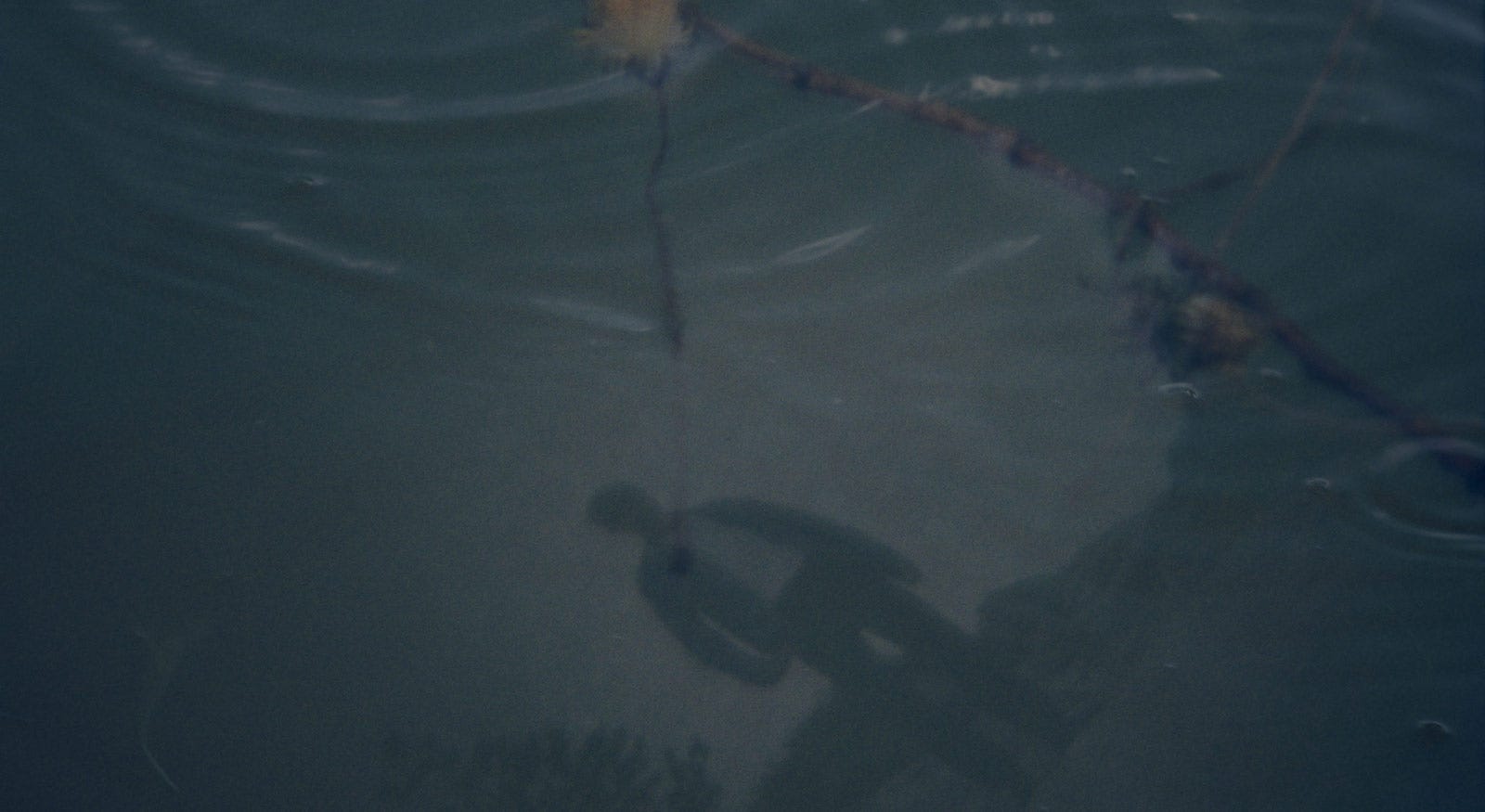
The programme opened with Shireen Seno’s You Dreamt You Saw Yourself But Couldn’t See Your Face, a short film that explores the elusive nature of memory through analogue filmmaking. The film has a certain tactility, its grainy textures lending the images an almost palpable quality. Old photographs are reflected onto the surface of a river, and at times, their edges seem to dissolve into moving water. The blurred silhouettes appear like ghostly apparitions, suspended between the stillness of the photographs and the continuous flow of the river. This juxtaposition evokes the act of remembering: certain moments remain vividly etched in our minds, yet their contours become increasingly difficult to discern and pinpoint. Through the interplay of stillness and movement, Seno has transformed memories into something both tangible and elusive.
Nicolaas Schmidt’s September Afternoon opens with a playful montage of footage from an ice-cream commercial, accompanied by a cheesy jingle ripped straight out from the 90s. The montage ends as the taunting phrase “a post-postmodern persistence parable” flashes across the screen, giving way to an abstract interplay of colours pulsating to the rhythm of the music. There is something strangely familiar about these images, almost akin to the way light filters through our eyelids when we close our eyes.
Like Seno’s film, the opening of September Afternoon evokes the elusive nature of memory, though Schmidt’s approach is less concerned with the recollection of particular people or events than with the persistence of seemingly insignificant impressions. His shifting colours and light recall the incidental images that are inexplicably lodged in our minds: the way sunlight filters through a room or how trees and buildings blur into one another through the window of a moving train. These fragments are etched in our minds not necessarily because of their significance, but because of the peculiar ways in which we remember. In their abstraction, Schmidt’s images become strangely evocative of memories that are vivid in sensation but difficult to place in time.
As the camera zooms out, the shifting colours begin to take on recognisable forms, eventually revealing a child looking out a car window. Even as the film moves towards more conventional imagery, Schmidt continues to challenge our expectations of cinematic storytelling. A simple exchange of objects is punctuated by close-ups of hands in motion, while seemingly mundane actions unfold over unusually prolonged durations. We watch as a man struggles to erect a sun shelter on a beach, buffeted by windblown sand, while a woman attempts to eat an ice cream under the same unforgiving conditions.
Rather than advancing a narrative, these moments direct our attention towards the incidental details that conventional filmmaking might otherwise overlook. The changing quality of sunlight, the movement of sand in the wind, or the awkward gestures of a person performing an ordinary yet Sisyphean task become subjects of contemplation in themselves. In allowing these moments to unfold at their own pace, Schmidt invites us to reconsider what is worthy of our attention by finding something strangely affecting in the seemingly inconsequential.
Whether through the materiality of analogue images or the fleeting impressions of everyday life, both films evoke the images and sensations that linger in our memories with explanation. Perhaps it is in these seemingly inconsequential moments that we find the most enduring traces of how we experience and make sense of the world around us.
Written by Phyllis Chan, edited by Daryl Cheong