


I asked my father if he would have felt as emotional if Dear You (2026) had been in Mandarin. Before I could even finish my question, he said, “No.”
My mother had excitedly informed me that he cried during the film. To say the least, this came as a pleasant surprise. My father is usually the one laughing whenever my mother or I shed even the slightest tear at the cinema. But Lan Hongchun’s Dear You had caught him somewhere neither of us expected. Despite the Teochew sounding different from what he was accustomed to in Singapore, hearing it brought him back to his younger days and memories of his grandmother. My mother even caught him singing along to the folk songs in the film.
For my father, Dear You marked the first time he had heard his language on the big screen.
The film had been all the buzz in China and Southeast Asia, but in Singapore, there was a particular excitement surrounding its release. Many older Singaporean Chinese were looking forward to hearing Teochew in the cinema, a language that, despite Teochews being the second-largest Chinese dialect group in Singapore, has rarely had much of a presence on our screens.
Hokkien speakers have long had Taiwanese dramas and films to turn to, and Cantonese travelled through Hong Kong cinema, TVB dramas and Cantopop, to the extent that even I, who cannot speak a lick of Cantonese, can sing along to Beyond’s “海闊天空” (Boundless Oceans, Vast Skies). Teochew never developed quite the same presence here.
Perhaps that explains the frenzy surrounding Dear You. Tickets to screenings of the original Teochew version sold out within hours. “It made me anxious,” my mother told me. For once, it was the older generation experiencing the peculiar anxiety of fighting for tickets to something popular.
Yet Dear You does something stranger than simply offering Teochew audiences the pleasure of hearing themselves. For my mother, what felt unfamiliar was seeing the Southeast Asian Chinese experience imagined from the other side — from Chaoshan looking towards those who had left.
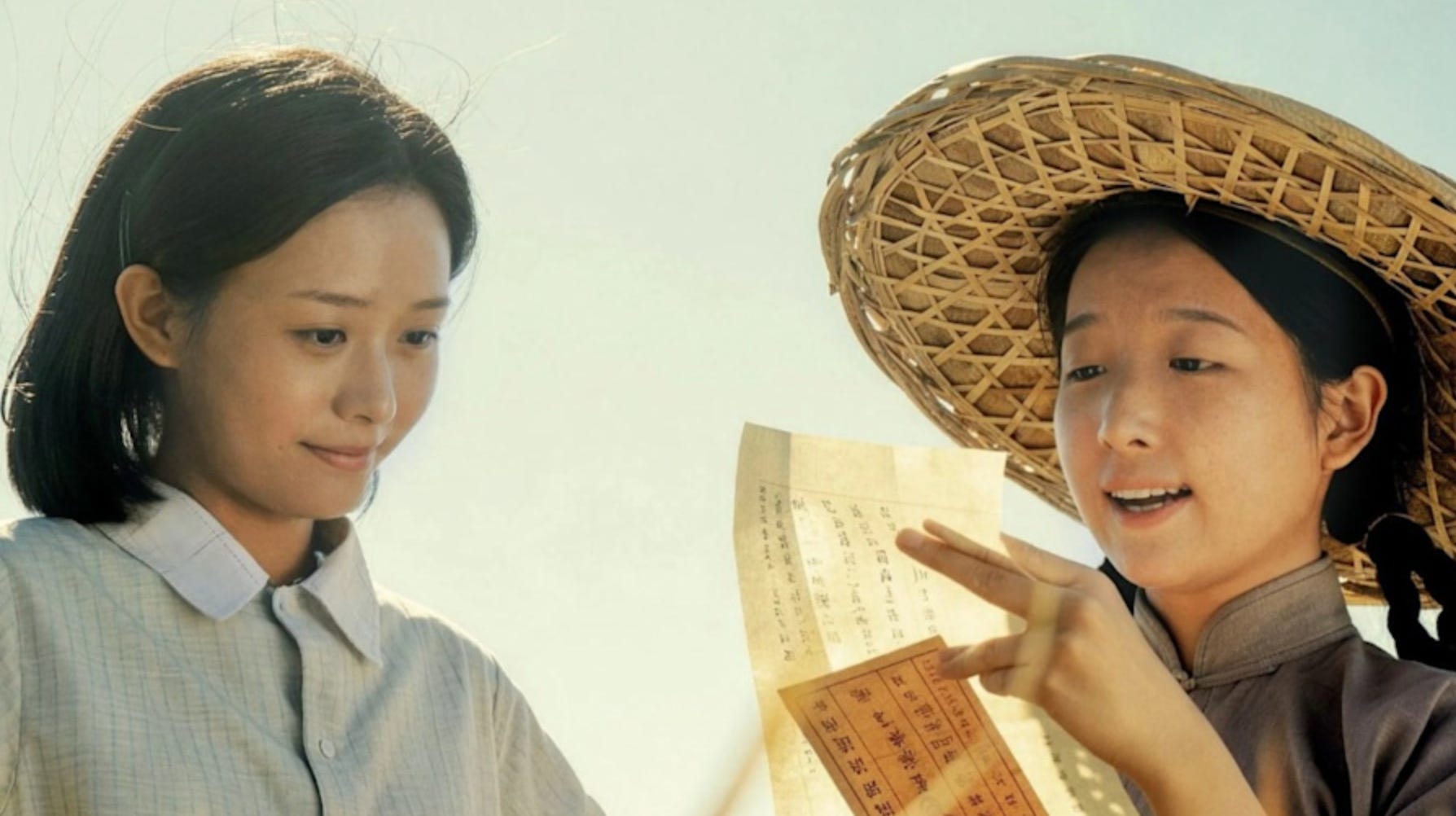
Towards the end of the film, Sogriu travels to meet Thai-Chinese Lamgi, who had financially assisted her husband and his family who remained in Chaoshan. However, by the time they meet, Lamgi has dementia. The reunion arrives, but memory does not. The two women possess a shared past without being able to share it in the way they might have wanted. It was an ending my parents had not expected, and one that left them both in tears.
There is something painfully apt about this somewhat failed reunion. The relationship between South China and its Southeast Asian diaspora has not disappeared entirely, but the people, languages and memories that once held together that relationship are gradually disappearing.
My Hokkien mother remarked that Dear You felt different from the Taiwanese media she had grown up watching, or even Singapore’s own dialect films. There was a different imagination of the past at work. Southeast Asia was not simply looking backwards towards China as an ancestral homeland, but China was also looking out towards the people who had left its shores, and towards the lives they had built elsewhere.
Perhaps this is why Singapore’s recent attempts to rehabilitate dialects leave me with mixed feelings.
If I could surmise Singapore as a nation, perhaps it is one that looks at the past with regret. At this year’s National Day Rally, Prime Minister Lawrence Wong announced a further relaxation of longstanding restrictions surrounding dialect content. Although acknowledging that many now see dialects as “a cultural heritage worth preserving”, he also stressed the need to protect the “hard-won gains” of the Speak Mandarin Campaign.
But preservation is a strange word for a language.
It makes me think of something already on its way to becoming an artefact.
There is a particular irony in being told that dialects are now our cultural heritage when many Singaporean Chinese of my generation can barely string together a sentence in the languages of our grandparents. Some can no longer understand them at all. In spite of the nation’s focus on Mandarin, not all Singaporean Chinese are well-versed enough to carry a conversation.
As someone who has already lost her own tongue, hearing our national leaders speak of dialects as something to be preserved leaves me with a certain resentment. Perhaps that sounds pessimistic, but the reversal feels painfully late. With every generation, there are fewer opportunities for these languages to be passed down—not only within families, but through the films, television, radio and popular culture that allow a language to exist beyond the home. For communities with fewer speakers and even less media representation, such as Hainanese and Hokchew, that future feels even more precarious.
Dear You cannot reverse that loss. But for two hours in a cinema, Teochew was no longer something relegated to conversations between grandparents, half-understood phrases or memories of a Singapore that no longer exists. It filled the theatre with a language that was suddenly alive again.
Written by Phyllis Chan, edited by Daryl Cheong