

At a post-screening Q&A for Mayilaa, actor-turned-director Semmalar Annam spoke of how her film is forged through personal experiences, both as a girl growing up and as a mother, as well as observations gathered from her time in rural villages around India.
When asked about the subject of spirituality in her film, she spoke of her own experiences as a child and witnessing family members enter trance-like states. While Annam’s father would try to explain it away, she came to realise as she was growing up that these behaviours served as ways in which women were able to express their unspoken emotional struggles, trauma and guilt.
Annam noted the realities of living as a woman in a patriarchal society and credited the political edge of her film to be merely a by-product of trying to relay the stories she had gathered to audiences with fidelity rather than a purposeful bid for controversy.
She continues to point out the daily realities of abuse endured by women all over India and the entrenched system of thinking which oppresses them but finds significance in their response rather than their situations. They typically approached their lives with humour rather than melancholy, and Annam shaped her film precisely around this dichotomy of trauma and hope.
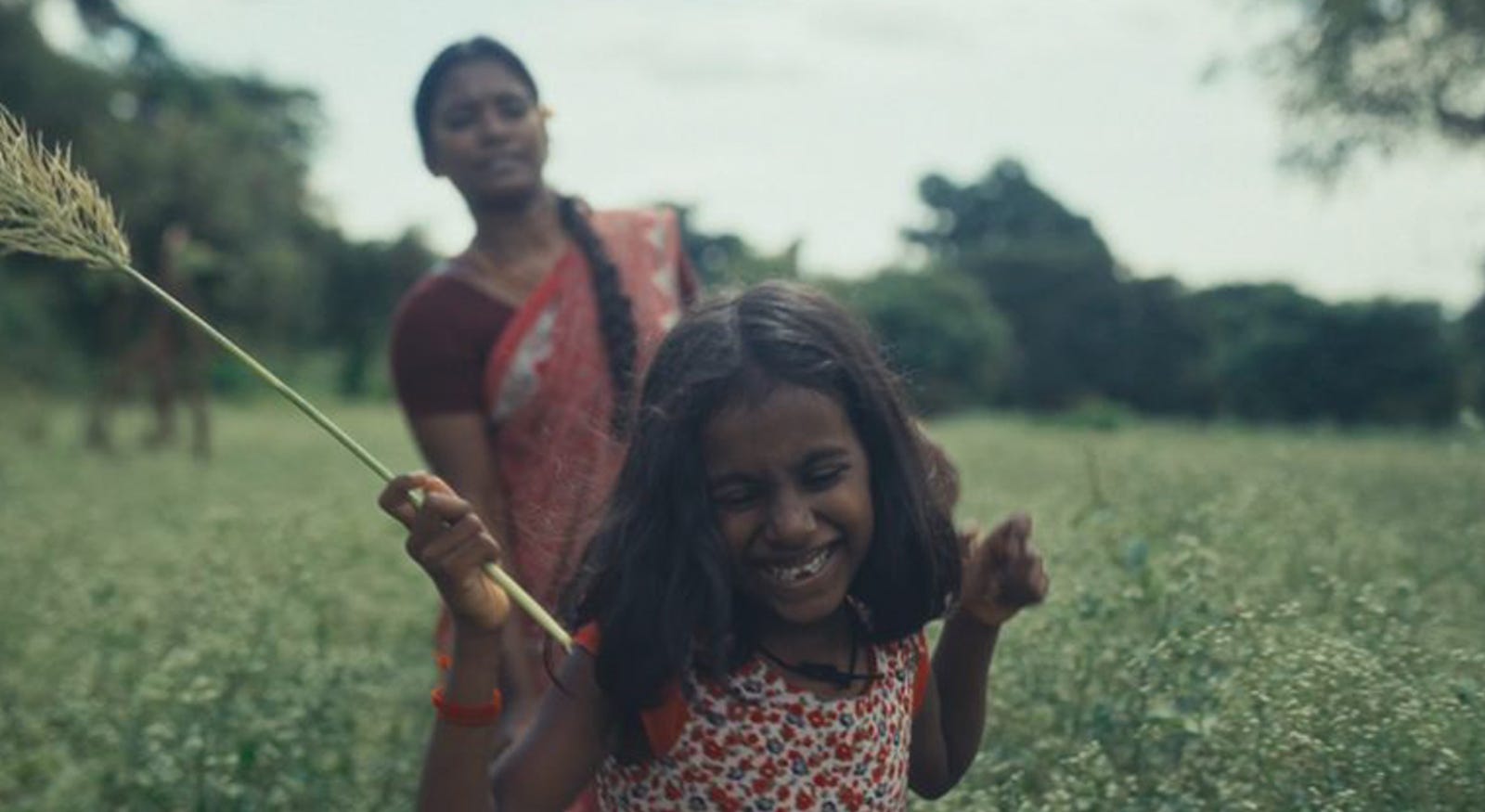
Annam also revealed that the young girl in the film who plays the daughter of the protagonist is actually her own, and that the prominence of constipation in the film (which turns into a running gag) is born from troubled encounters with her daughter in real life.
Annam confirms the metaphor of constipation as subjugation, and speaks further on the comedic relief of such a choice, relaying again her intentions of situating the film in hope and healing rather than negativity.
The director also spoke of the role of community in her film and the importance of recognising the invisible threads of community that exist to support women in times of need, and even gives credit to this sisterhood as a key factor in the development of Mayilaa.
Mayilaa, Tamil for peacock, serves as a constant reminder of the injustices of patriarchal society. Men are given the means of expression while women are cast aside. Though unlike the animal kingdom, Annam conjures a world in which every woman can spread their metaphorical feathers and express their experiences, desires and dreams more freely.
Written by Adrian Ho, edited by Phyllis Chan