

I’ve always enjoyed the stripped-back nature of Hamaguchi’s films. His deliberate lack of cinematic excess and patient pacing always felt like the perfect environment for human expression. Better yet, Hamaguchi consistently manages to juxtapose these intimate narratives between strangers with a vastness of emotion, frequently lending his films a distinct texture that can only be described as piercing.
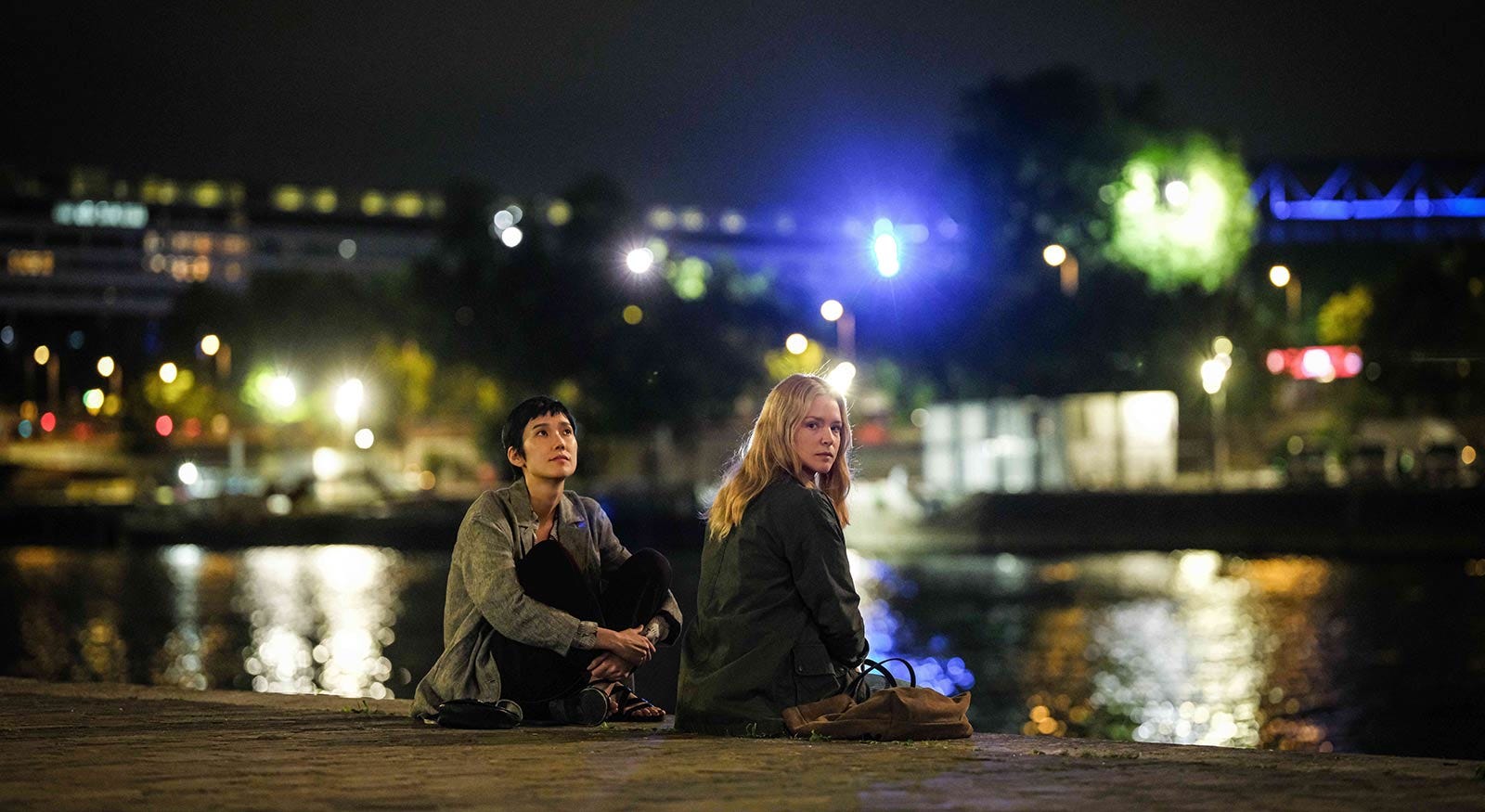
From the opening moments of All of a Sudden, when Marie-Lou (Virginie Efira) attends to a confused patient with complete compassion and attention, I could feel the breadth of humanity which brimmed through this picture. The 195 minutes that came after merely confirmed that Hamaguchi had arrived at his most humanist film yet. All of a Sudden begins with a war of ideals, as Marie-Lou attempts to train her staff in the ways of humanitude, a simple yet increasingly foreign concept of treating patients with dignity and care. Her idealism is met with the cynicism and nose-thumping that’s only to be expected of this modern age, but Hamaguchi’s film is relentlessly hopeful of the possibility of change, and of those—like Marie-Lou—who rage against the machine.
All of a Sudden is a film which asks us first to consider the path of resistance, and then follows up by demonstrating that every act of resistance has the potential to inspire and overcome. One man’s fight against the infernal machines of capitalism may seem futile, especially when it is impossible to distance ourselves from the very systems that grind us down to dust. Yet to resign ourselves to this futility would be to forgo the essence of humanity and its radical power to connect. So while the film may begin from Marie-Lou’s perspective, it truly comes into its own when it transforms into a two-hander built around the rapidly blossoming relationship between its two leads. Through the central relationship dynamic of Marie-Lou and Mari (Tao Okamoto), All of a Sudden seeks to find out just how much of a difference one person can have on another.
While Marie-Lou’s impossible battle is an external one, waged against an oppressive force, Mari’s is a battle of attrition against death—an internal struggle with terminal-stage cancer, with only one end in sight. It is in these impossible circumstances that Hamaguchi is determined to show the mighty power of hope. While some may lament the film’s glacial pace or the didacticism with which it indulges, I accept it as a demonstration of ideals in action. A philosophy put to practice. It takes a concerted effort to stay with the film, as it does to stay with the path of resistance, but it is precisely this continuous act of rebellion which promotes change. Similarly, the space and time Hamaguchi provides for this central relationship allow it to blossom, a crucial choice for a film concerned precisely about humanity and its relational qualities.
There’s much catharsis to be found in the life-affirming beliefs of Hamaguchi’s latest humanist masterwork: to persist until the moment of departure, to hold out for hope, and finally, to approach all ends as if they were never inevitable.
Written by Adrian Ho, edited by Phyllis Chan