

One of Europe’s most original auteurs of late continues his reinterpretation and ‘adaptations’ of works such as Dracula with his latest film The Diary of a Chambermaid (2026). The film is a loose adaptation of the same-titled novel from 1900 by Octave Mirbeau, and is Jude’s first film in French. In it, Romanian migrant worker Gianina works for a wealthy French couple as caretaker and nanny for their young son. Per Jude’s signature satire, Gianina becomes a conduit and agent for criticisms about modern liberalism and artistry.
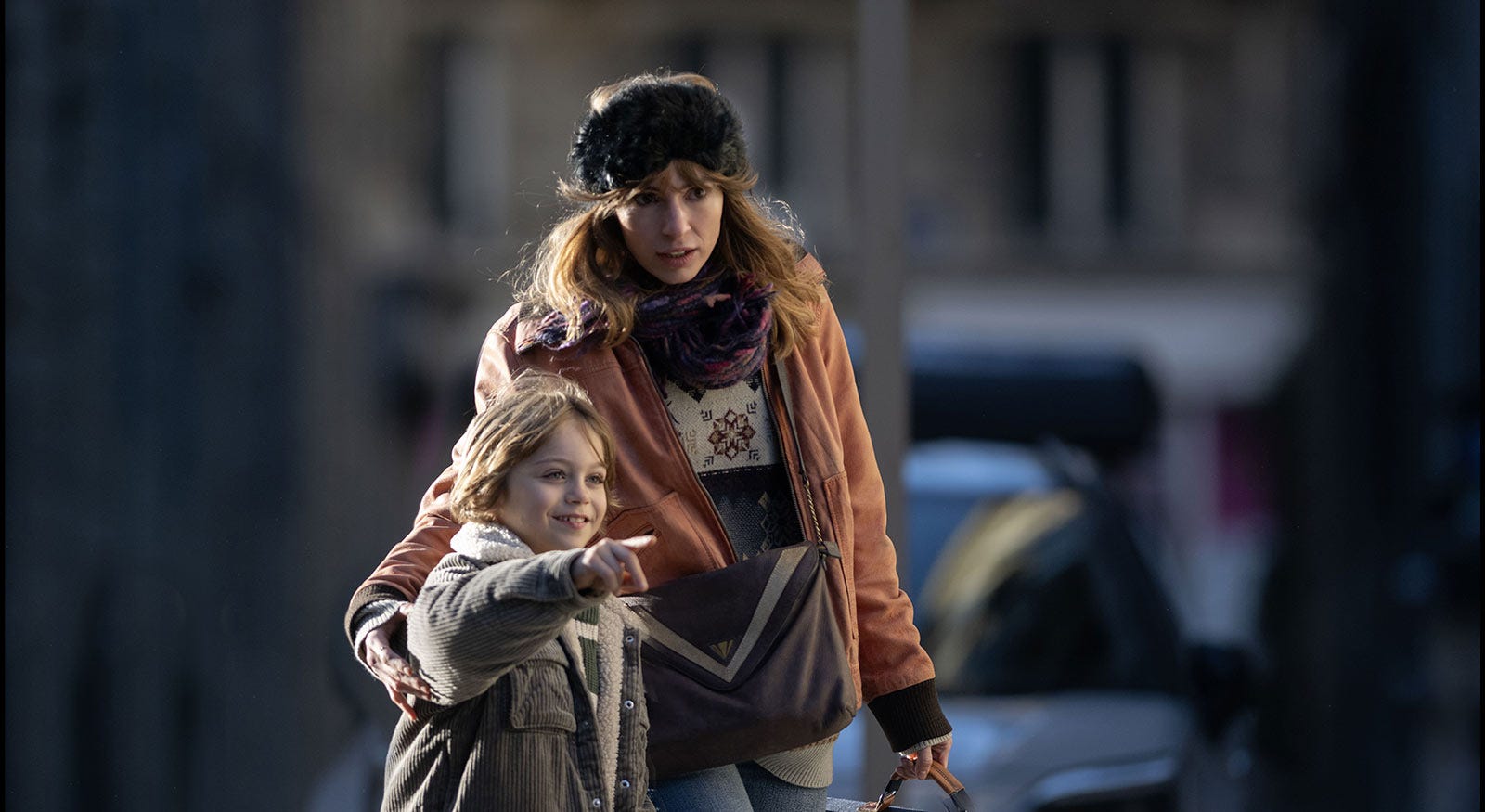
In the original novel, Célestine is a chambermaid working for the French elites. Through her diary, readers encounter the hypocrisy, sexual exploitation, cruelty and moral corruption of the bourgeoisie. In Jude’s adaptation, he retains the position, class criticism, and diary structure. Episodic scenes are bookended by intertitles of dates, rendering the film a diary in itself. Some dates are just filled with mobile phone footage of the landscapes. Jude’s borrowing of the novel’s form is his way of considering the class divides and contradictions of Europe today, particularly between Western and Eastern Europe, the war in Ukraine, and the subjugation of migrants both European and elsewhere.
Per classic Jude, erudite and witty conversation scenes expound on Jude’s criticism. At a dinner party hosted by Gianina’s employers, they compel her to stand around as questions are asked about Romania and her perspectives on Russia. Unlike the heated arguments proposed by the guests, Gianina knows nothing. All she remarks is that her grandparents had told her that “the Russians are bad.” Amidst such intellectualism, off-handed remarks that “Zelensky is sexy” and that the Ukrainians should just surrender like the “French” point to the superficialism and wilfully ignorant hedonism of the French––a larger stand-in for the wealthier Western Europe.
Between scenes of work where Gianina oscillates between politeness in front of her employers juxtaposed sharply with immediate insults to them in Romanian, and phone calls with her daughter and mother back in Romania who demand her return, Gianina participates in a theatre performance by university students. They are inspired by the work of Augusto Boal to work with non-actors, casting migrants to “help” them. Yet, Gianina is only acting because her employer, a lecturer, compelled her to. Furthermore, when her non-European co-actor is deported because the students’ social media publicity about the play exposed his illicit status, all these students remark is that he is “not one of us.” Even, and especially among the artists, hypocrisy pervades.
Classic Radu Jude. Satire, dramatic debates, and criticism of contemporary society (particularly of the artists, elite, and liberal class). Such is his auteurism that in a transient scene, we even see a film about Dracula playing on the television, a reference to his 2025 film. Yet, unlike much of Jude’s work, there is also a gentleness in this film: Gianina. In her fully-fleshed insult-spewing characterisation, she transcends the archetyping in his other works when we understand the structures she works under. Even the mobile landscape shots become an access point into understanding her psyche. Through and for her, Jude has conjured a softness that could allow this film an easier access point for those less familiar with his imperative filmography.
Gianina recounts a Romanian story near the end of the film––The listeners were horrified by people throwing cats directly in the river, and more comforted when the cats were first put in a bag. Gianina is puzzled by the reaction, since the shelters taking in overpopulation of stray cats would have killed them anyway. Jude exists in a tradition of truth-telling in a contemporary age of untruths that reminds us to ignore the veneers of ‘civilisation’ and ‘culture’ to realise that, at the end of the day, whether by us or someone less powerful than us, we are all pussy killers.
Written by Daryl Cheong, edited by Phyllis Chan