

The second of Minikino’s five short film programmes centred around the “heart”, ‘Adore’ frames this collection of shorts as one “where our deepest wants meet our quietest fears.” Yet, as all of these films demonstrate, if desire can only be realised by grappling with our heart’s depths of uncertainties and fears, it is worth it.
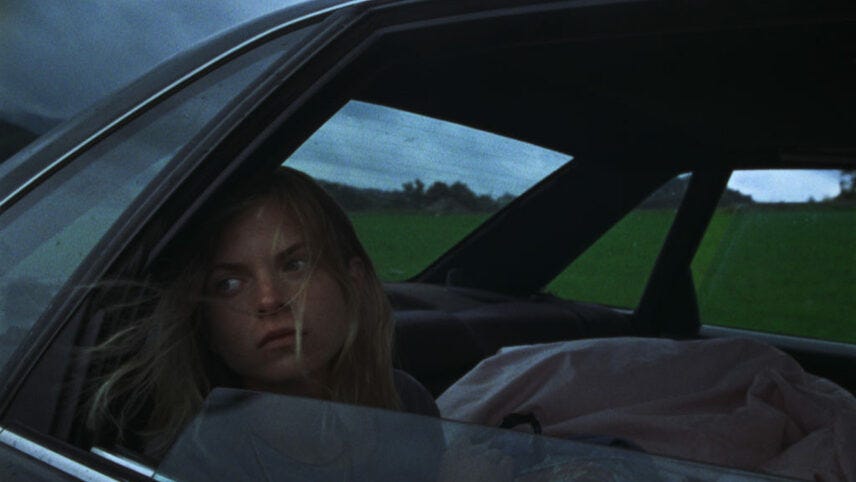
Opening the programme, Łodz Film School’s Polish graduation short Dying of the Young Deer (dir. Angelika Cygal, 2025) centres around a young girl leaving her family home to journey to her husband’s house, accompanied by her mother’s quilt and eccentric experiences with villagers. Shot on analogue film, the story develops an ethereal and timeless quality, apt for a predicament familiar to newly engaged women: to leave the familiarity and comfort of one’s childhood home for an entirely new life shaped by patriarchal expectations. Helka Rząsa’s leading performance is wordless yet powerfully embodied, becoming a conduit for the atmosphere of uncertainty.
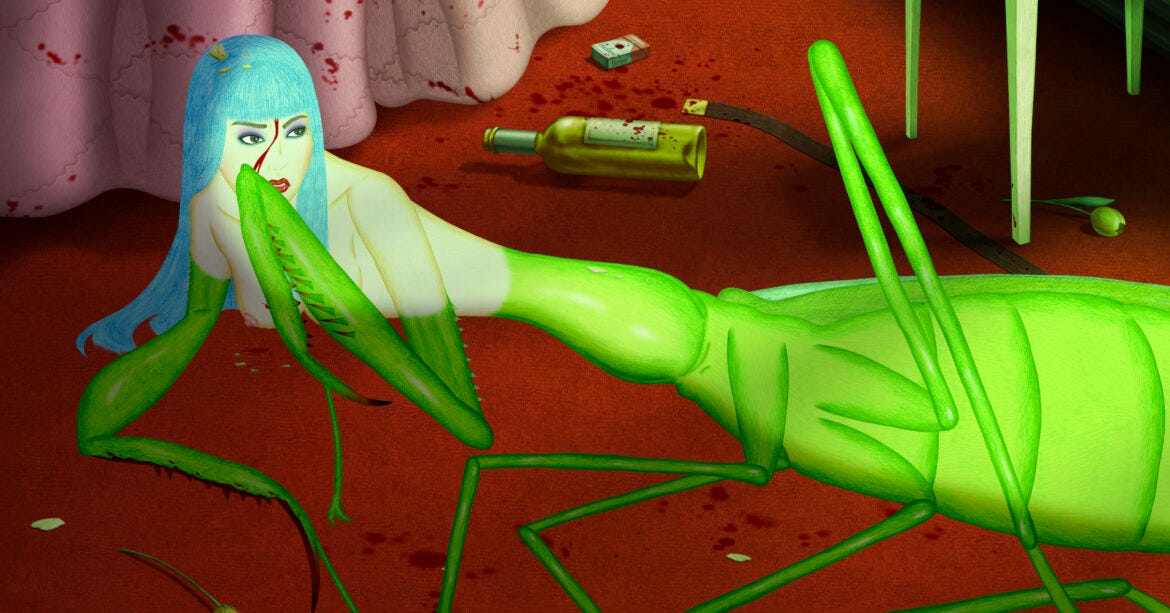
Joe Hsieh’s animation Praying Mantis (2025) has travelled the festival circuits since its premiere at the Venice International Film Festival and is supported by film veteran Yonfan as executive producer. A mother mutates her son and herself into a praying mantis to allow his survival after a difficult birth, with both entrapping men to feed their appetites. The story had great potential to reflect queer and feminist realities, particularly when she remarks — “no matter what, he is still my boy” — words queer people fantasise hearing from their family. The parallels drawn between orgasm and death also allow for psychosexual discourse. However, the film’s ending creates a lacklustre conflict between the mother and the nurse, who had mutated them, to argue for what true motherhood is. A mother’s sacrifice is also rendered senseless by an ungrateful and unaware son. These elements betray the film’s seemingly noble intentions with lofty veneers of complication and maturity to disguise its reckless illogic.
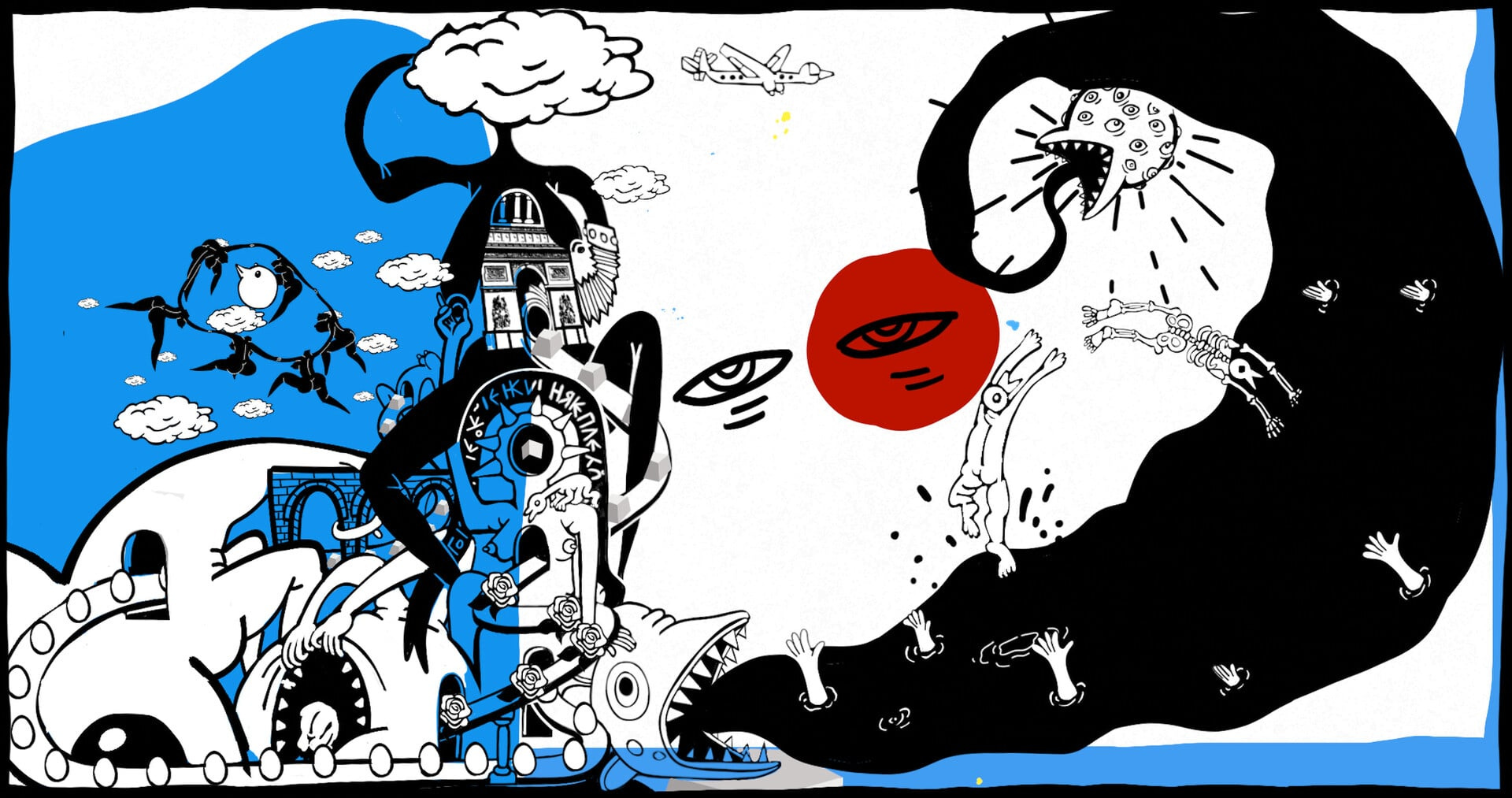
This human-mutant motif continues in Bulgarian Mira Yankova’s experimental animation Disturbia (2024) as a human-bird hybrid transforms itself amidst tensions of “economical, ideological, military and climatic threats.” At first watch, the synecdoche of the playful elements does not immediately read as these monumental topics. That is perhaps the film’s strength. With energetic vitality and whimsical animation, Yankova situates an audience in a world that is unstable, uncertain and full of threat. Hence, when the film’s resolution gestures to the filmmaker’s possible pessimism, its disturbing qualities affect the audience beyond its tight six-minute runtime.

Developed at the Locarno Film Festival Spring Academy, Malaysian filmmaker Mickey Lai’s At February’s End (2025) uses a short runtime of nine minutes to evoke an entirely new world to realise a fantasy of queer being. Wordlessly, a cleaning lady encounters a mysterious woman and begins a passionate affair of dance and beauty. With wide shots of breathtaking landscapes, ancient castles alluding to histories, and volatile, dazzling choreography, Lai challenges conventional associations of the setting by conceiving new imaginations for queer possibilities. The only words in the film come from a meaningfully composed haiku: “Hands scrub in silence / Soft echoes slip through the cracks / The stain breathes beneath.” Like the haiku, the film finds subversion in its sexy sibilance, beckoning for a new form of queer essence between mundane gestures and grand, ancient traditions.
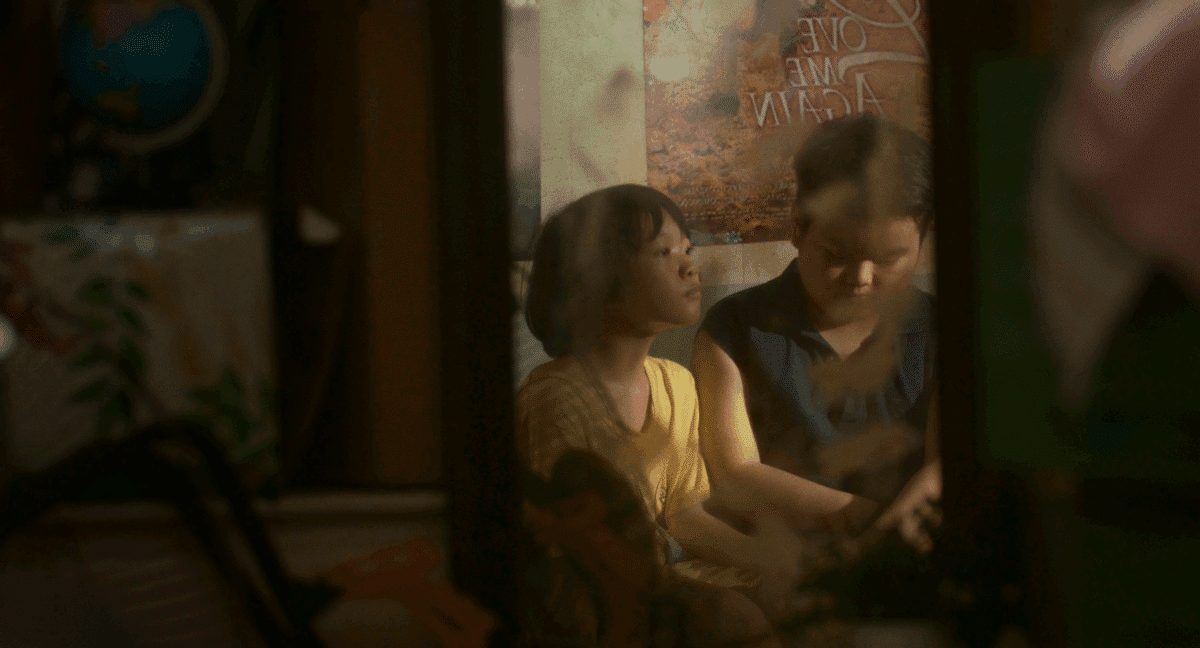
Closing the programme, Filipino JT Trinidad’s Honey, My Love, So Sweet is one of the most exciting Southeast Asian shorts from 2025. A beautiful ode to cinema, childhood, and queer innocence, the film follows a young boy, Life, as he grows up in a decaying cinema in Manila, finding growth through the discovery of films, a new friendship, and his blossoming affection for the friend’s father. JT never seeks to romanticise any of these elements, instead allowing the synthesis of these individual arcs to feel everyday and transient. Life, then, feels accidental, much like the experience of childhood, still too nascent and ignorant to fathom a moment’s significance.
The films of the ‘Adore’ programme are concerned less with what is desired. Rather, they are interested in what becomes of us through desiring. Like the homophone of the programme title, to ‘Adore’ is perhaps not dissimilar to ‘A door’: In desiring, and opening ourselves up to desire, what seems forbidden and uncertain affords us a new way of being.
Written by Daryl Cheong, edited by Phyllis Chan