

Mayilaa begins with the retelling of the legend of Mayilaatha, in which a young woman is betrayed and abused by her husband. She immolates herself and, after being denied the simple request of burial with her sari, returns as a vengeful spirit demanding justice. Her story is not remembered for the suffering she endured but for the promise of riches at the end of appeasement. A tragedy is transformed into a ghost story, where a woman is defined by her suffering, and even then, she doesn’t get to define it on her terms. This powerful village goddess, revered deeply by local women as a symbol of strength and protection, serves as the spiritual and emotional backbone of the entire narrative.
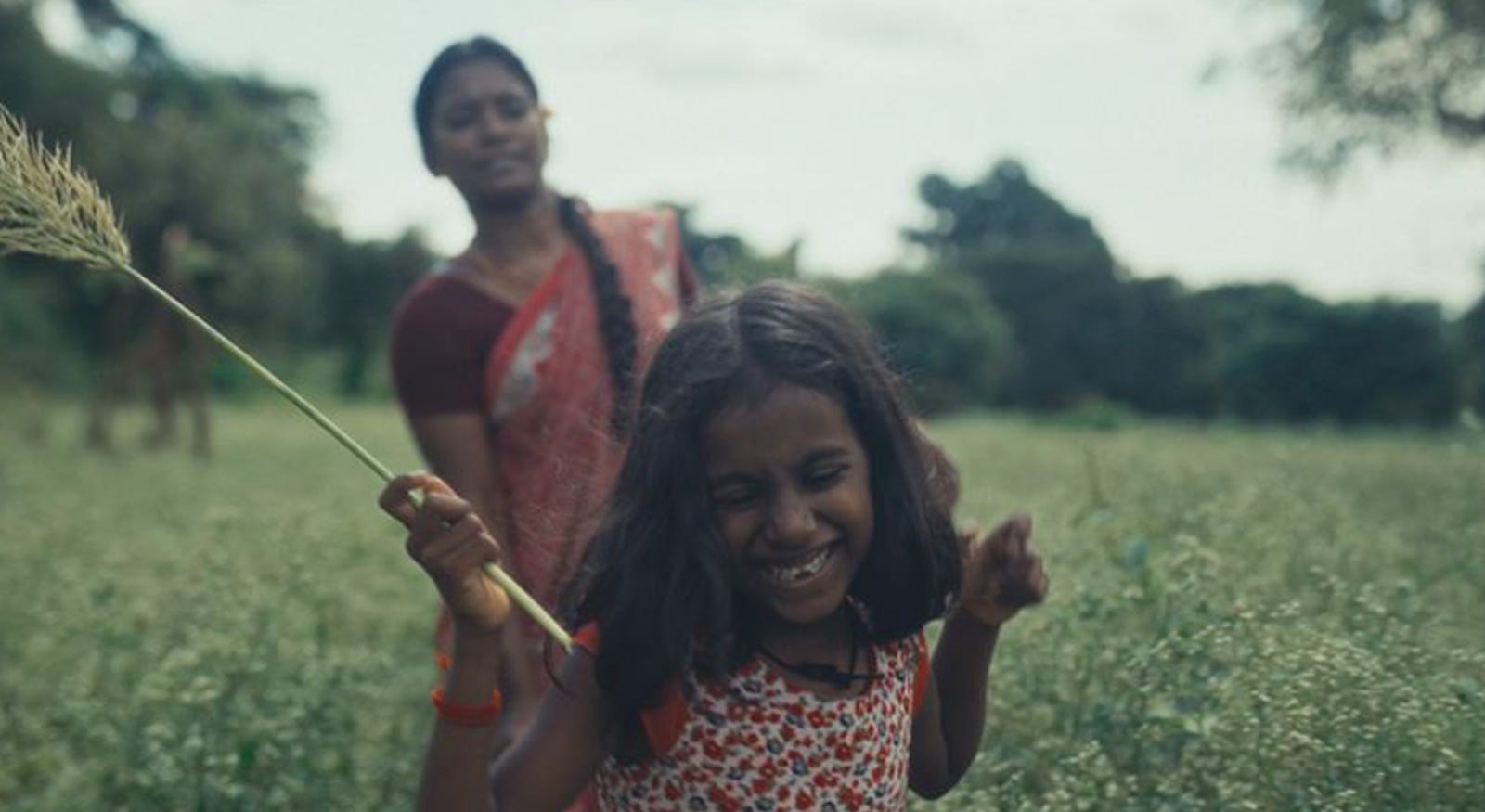
Within the film, the legend of Mayilathaa serves as a narrative engine, sending Poongodi (affectionately known as Mayilaa) on a quest to offer a luxurious silk sari to the idol statue of the Goddess before the annual temple festival. Having had her funds stolen from her by her abusive husband, Poongodi sets off from village to village on a moped, daughter (and sometimes, cat) in tow, to sell straw mats door-to-door.
Throughout Mayilaa, Poongodi’s fate lies in the mercy of men. Despite being relegated to the sidelines and physically absent from the narrative, their impact is felt through the imposition of patriarchal rule in their lives. On the homestead, this comes from a voice bellowing beyond the frame, a tightening of the purse, and a successful sale turning into a stern refusal. Not only is female independence at odds with living in a man’s world, but so is the collective resistance of these rural women. Often, Amman places these women against one another, with Poongodi on the receiving end of much of this malice. Whether it’s being the subject of gossip or merely treated with the suspicion and contempt of a door-to-door seller, women are often depicted tearing Poongodi down.
Mayilaa serves as a form of feminist awakening, with much of the film as a tutorial for learning to look out for one another and hold space for kindness and support. While the film continues to be about how society fails women in small ways every single day, it also never buckles under the weight of its tragedy.
Rather, the film stubbornly holds onto hope and displays this through the comic relief which comes often through the scatological humour of a constipated daughter. And Mayilaa is precisely the sort of film which would take pride in delivering its flourish through bodily discharge! This is hardly a film of pretension after all. Rather, Mayilaa is a film about owning your struggle and speaking up with your own voice — of the pride in being who you are, regardless of where you come from.
Written by Adrian Ho, edited by Phyllis Chan