

KwanTeo presented a restored version of the Chinese cinematic classic Crows and Sparrows (1949) on 17 July 2026 in its original Shainghanese. Discourse on restoration is relatively new and refreshing, where the speakers’ breakdown of the technicalities was illuminating for attendees. Beyond the film’s historical significance in critiquing the defeat of the Kuomintang and their eventual departure for Taiwan, the film simultaneously uplifts the Communist Party and its ideals. This landmark restoration from 2024 highlighted a shifting consciousness perfectly placed for KwanTeo.
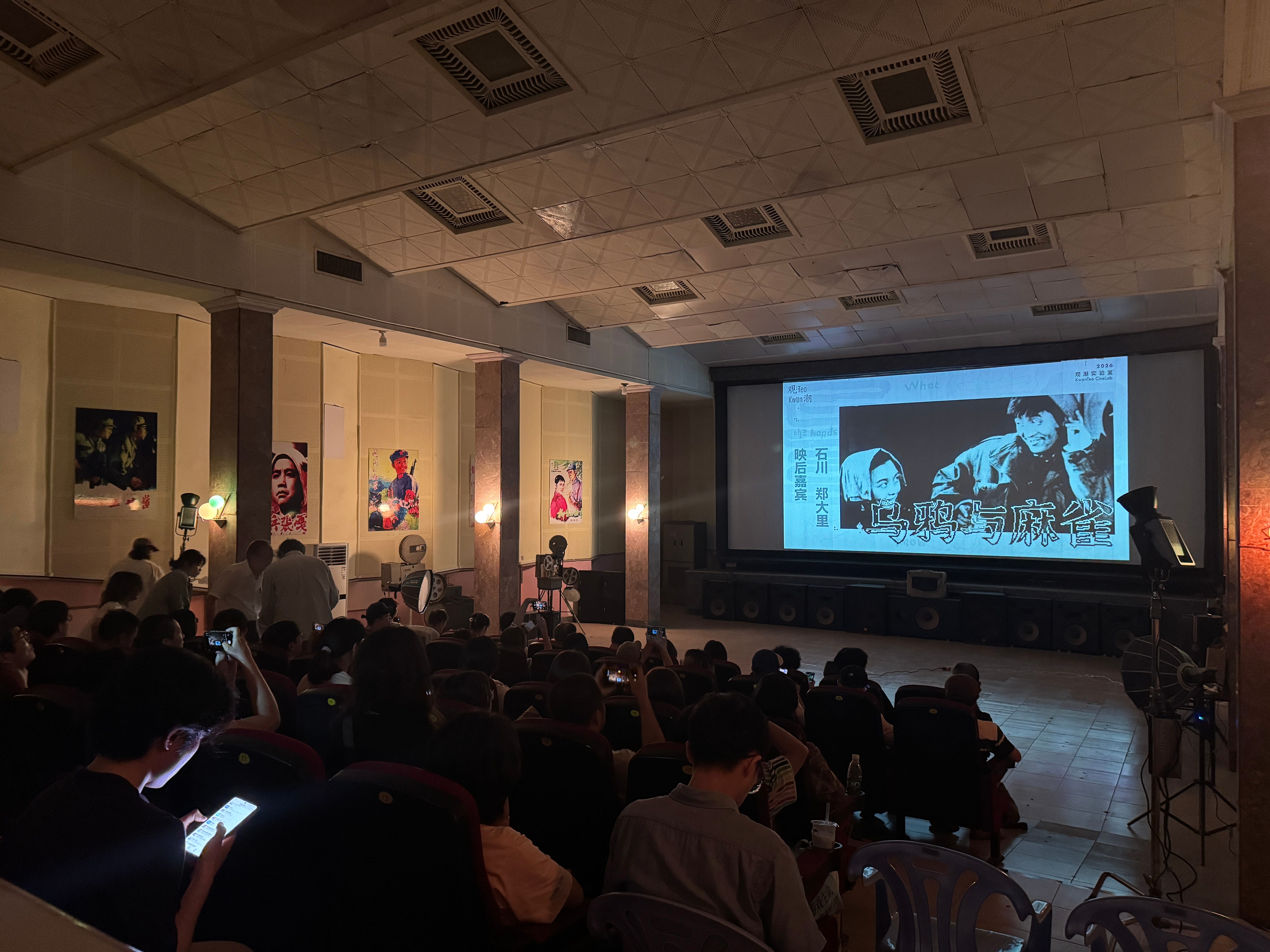
Shi Chuan, a professor at the Shanghai Theatre Academy, who is active as a film programmer and researcher, spoke at KwanTeo. He was one of the producers of the 2K restoration that premiered in 2024 at the Shanghai International Film Festival, which was part of a special programme celebrating the 75th anniversary of the formation of the People’s Republic of China.
For Shi, the language matters.
As part of a national campaign to boost unity, Mandarin was encouraged. Conversely, Chinese languages and dialects were discouraged. This included Shanghainese, a dialect of the maritime metropolis that was spoken in the original film. However, for its initial release after the Chinese Civil War, the film was initially redubbed into Mandarin.
For this Shaghainese restoration, it is not just a cinematic existential moment. It is also a linguistic one rooted in identity, where the film’s intended language can finally be restored to the image.
However, Shi pointed out that modern Shanghainese has developed largely from that of the ‘40s. It has become influenced by slang and the dialects of neighbouring cities. The initial film production also saw deviations from the written screenplay, where actors were encouraged to improvise on set.
Sound, therefore, had to be the first step in the film restoration process. The team had to re-translate the screenplay from Mandarin to Shanghainese, which does not exist in written form.
Then, the contemporary voice actors needed to adapt themselves to a different form of speech. In recording the dub, the voice actors physically embodied and replicated the performances and actions of the film’s original actors. They endeavoured to capture the energy of the initial film.
Shi was joined onstage by Zheng Dali, the son of the film’s director Zheng Junli. Zheng Dali was part of the restoration process and even voiced one of the roles. Other descendants of Shanghai’s first-generation filmmakers were also invited to lend their voices to the project. Speaking on this decision, Zheng expressed his gratitude that the film could be a “tribute” to the contributions of these pioneering artists.
The original film played a monumental role in shaping national consciousness, particularly vis-à-vis its allegorical support for Communism. The respectful restoration process, therefore, uplifts and celebrates the past, and also commemorates a key cinematic achievement for China.
Above all, by embracing the intended dialect, the sharing emphasised the growing acceptance of other Chinese languages and dialects, particularly by a younger generation more acquainted with Mandarin. KwanTeo, as a film event emphasising the role of Teochew as language, origin and space, provided a natural and inspiring synergy, reminding audiences of the pivotal role it plays in propelling Chinese cinema towards new directions.
Readers interested in the specific restoration process may refer to this helpful article by Peng Pai, a Chinese publication.
Written by Daryl Cheong, edited by Phyllis Chan