


Modest in form and shot entirely on a DV camera, Chinese independent documentarian Feng Yan’s Bing’ai (2007) feels less like a conventional documentary and more like a collection of home videos. The film follows its titular protagonist, Zhang Bing’ai, one of more than a million people who were displaced by the construction of the Three Gorges Dam.
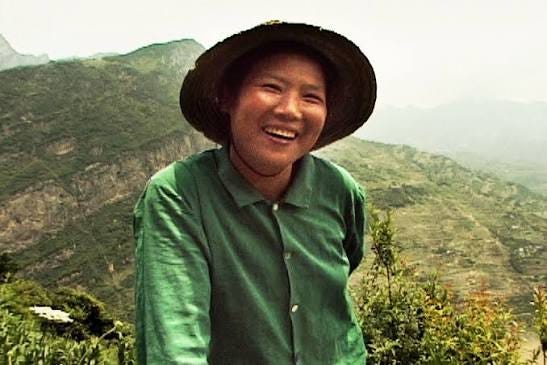
First travelling to the Three Gorges region in 1994, Feng initially documented the lives of its many residents, a project that eventually culminated in her debut documentary, The Dream of the Yangtze River (1997). Returning to visit the village in 2002, she continued to film and gradually found herself drawn to a local peasant woman, Bing’ai.
On the surface, Bing’ai’s life appears unremarkable. Like many women in the reservoir region, she married young, raised children and worked the land. However, beneath this ordinariness lies her relentless battle with bureaucracy. As villages bear the threat of submersion due to the dam’s construction, many residents were forced to relocate. Yet Bing’ai refuses to take it quietly. Determined, she readies herself to fight against bureaucracy to remain on the land she has now called home, a land that she has worked and tended to with care and painstaking effort.
Feng’s framing quietly reinforces the imbalance of power that defines Bing’ai’s life. As she negotiates with the village secretary, Bing’ai is pushed deep into the background while the foreground is dominated by the official’s legs as he absent-mindedly swats away at flies. The composition makes her seem almost insignificant within the frame, mirroring her place within an opaque administrative system. As the secretary insists that he is merely carrying out orders from higher authorities, references to countless departments and government agencies reveal a bureaucracy with no discernible centre, exposing an endless chain of responsibility that continuously defers any accountability.
Bing’ai and her husband argue fiercely with these local officials, refusing to accept their circumstances without resistance. Yet once the confrontation ends, an ominous silence settles between them. It is devastating to witness, as one realises that both of them are quietly aware of how futile their struggle is against this vast system.
Throughout the film, bureaucracy infiltrates every aspect of Bing’ai’s existence. She recounts her pregnancies and the abortions that followed due to China’s One-Child Policy directly to the camera with remarkable composure, as though these experiences are everyday occurrences. State policy governs not only where she is allowed to live, but also her bodily autonomy, turning even the most intimate aspects of her life into matters of administration.
Nonetheless, Bing’ai is never reduced to a victim in this documentary. Stubborn, sharp-witted and deeply indignant, she even declares that she intends to outlive those who demanded that she uproot her life so she can witness their downfall. Feng could have easily portrayed her as a tragic figure, but instead she documents every facet of Bing’ai’s personality as if she were one of your neighbours, friends, or even family. She is warm, personable, and her unwavering defiance only makes her impossible not to admire.
In the film, Bing’ai mentions to Feng that 「土能生万物」— “The earth gives rise to all living beings”. For her, land is not merely property to be measured or redistributed, but instead it is evidence of her labour, memories and life itself. Through intimate touches, the documentary allows questions of how policy and development can ever bury the profound sense of belonging that land can afford to those who call it home.
Written by Phyllis Chan, edited by Daryl Cheong