


When my Wuhan-based grandfather visited us in Singapore, I decided to never speak to him again.
2017: pre-recession, pre-COVID. My grandfather decided to bring his estranged brothers. Keen to show off to the family, he brought them to expensive restaurants and stayed at the best hotels. To date, even I have never stayed at the Marina Bay Sands. The cost? Five-digit savings painstakingly set aside for my university education dissipated in less than a week.
This is, after all, the desire to present an image to one’s family. As if to emphasise this superficial reputation and respect, we Chinese call face — mian zi. But if you sacrificed comfort and familiarity for migration to what seemed to be a better circumstance, we must believe that it was worth it.
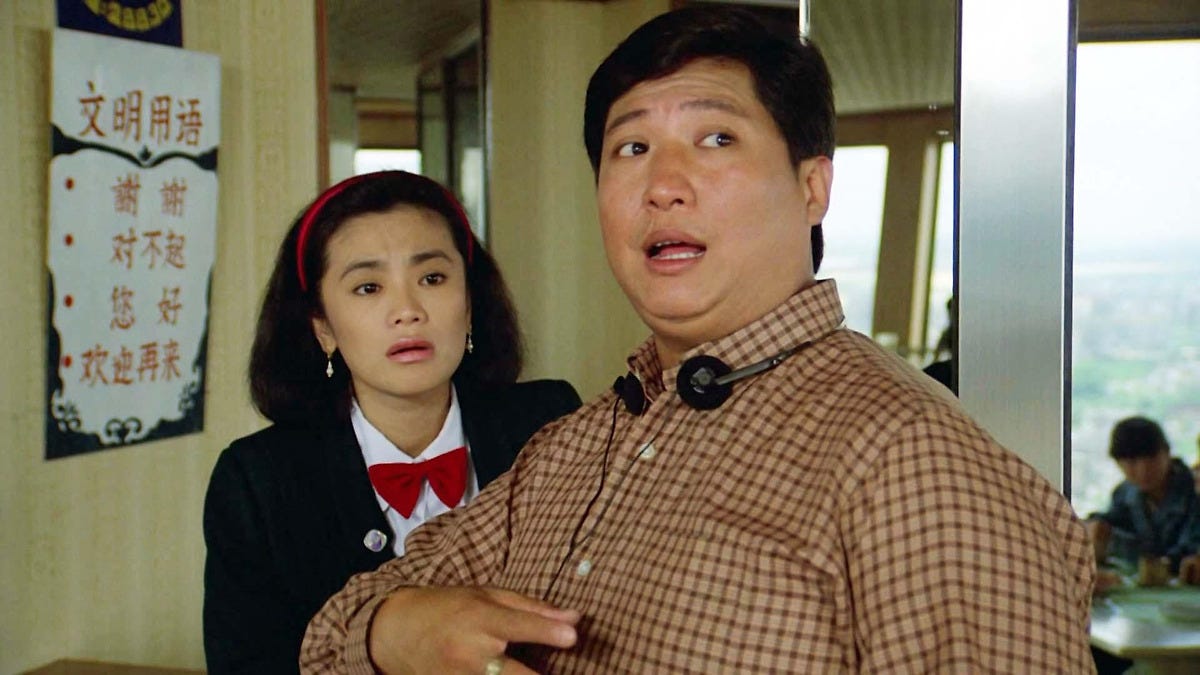
Such was the predicament protagonist ‘Monkey’ (played by the legendary Sammo Hung) found himself in Hong Kong New Wave Director Mabel Cheung’s 1989 film Eight Taels of Gold, which concluded her trilogy of films set around migrants. Taxi driver Monkey left China for the States a decade earlier, offering no contact save for a single letter. Having saved up enough, he eventually returned unannounced and showered his parents and village with gifts. This includes a poignant lighter modelled after the Statue of Liberty that he used to bribe a Chinese taxi driver for cheaper rates. When the driver asked what the English words ‘Made in China’ on the lighter meant, Monkey replies: “Freedom.”
Back home, he encounters Jenny (Sylvia Chang), loud-mouthed and a bully when they were younger, but now sensible and preparing for an arranged marriage that will see her migration to the States. As Monkey and Jenny embark on a trip to his village, love blossoms between the two.
Monkey’s departure from China was framed through the Cultural Revolution. His return is marred by the One-Child Policy that sees his sister having to secretly give birth to a coveted son, her second child. Sure, Monkey may dress fancier and can flaunt some wealth, but not much has changed or will change at home. Liberty remains out of reach. Consequently, he believes that the wealth associated with capitalist America must be the solution to plights: a rundown school, his decrepit family home, and the emptiness in his heart.
As Monkey and Jenny’s relationship blossoms, mian zi gives way to the search for sincerity. No amount of taxi money can buy freedom. Cheung uses the symbol of the American Dollar, counterfeited large bills given to villagers and entire wads loosely donated anywhere, to eventually stand for the meaninglessness of money.
In a final sequence reminiscent of Chow Yun-Fat’s iconic chase at the end of An Autumn’s Tale (1987), the one who leaves and the one who stays are no longer distinguishable. Contrary to Celine Song’s arguments, my grandfather or Monkey’s initial beliefs, sacrifice is not solely made by the migrant, but by all who had to stay too. In this futility, Cheung’s gentle proposition that no amount of cash can replace the sincerity of love remains true close to four decades later.
Written by Daryl Cheong, edited by Phyllis Chan

