


“So the action of the intelligence is directed to some end. For in so far as it understands, its end is the truth.”
Through philosopher Marsilo Fincio’s interpretations of Platonic ideals, one is reminded of the universal necessity of truth as a human quality. Yet, in many cinematic conceptions of unravelling the truth, most commonly found in the mystery genre, truth is positioned as the goal to be attained at the end of the film. Yet, what is striking about Fincio’s writing is the recognition of human limitations in “understand[ing]” an ambiguous end (“some”). It is therefore refreshing when a film encourages a re-examination of truth.
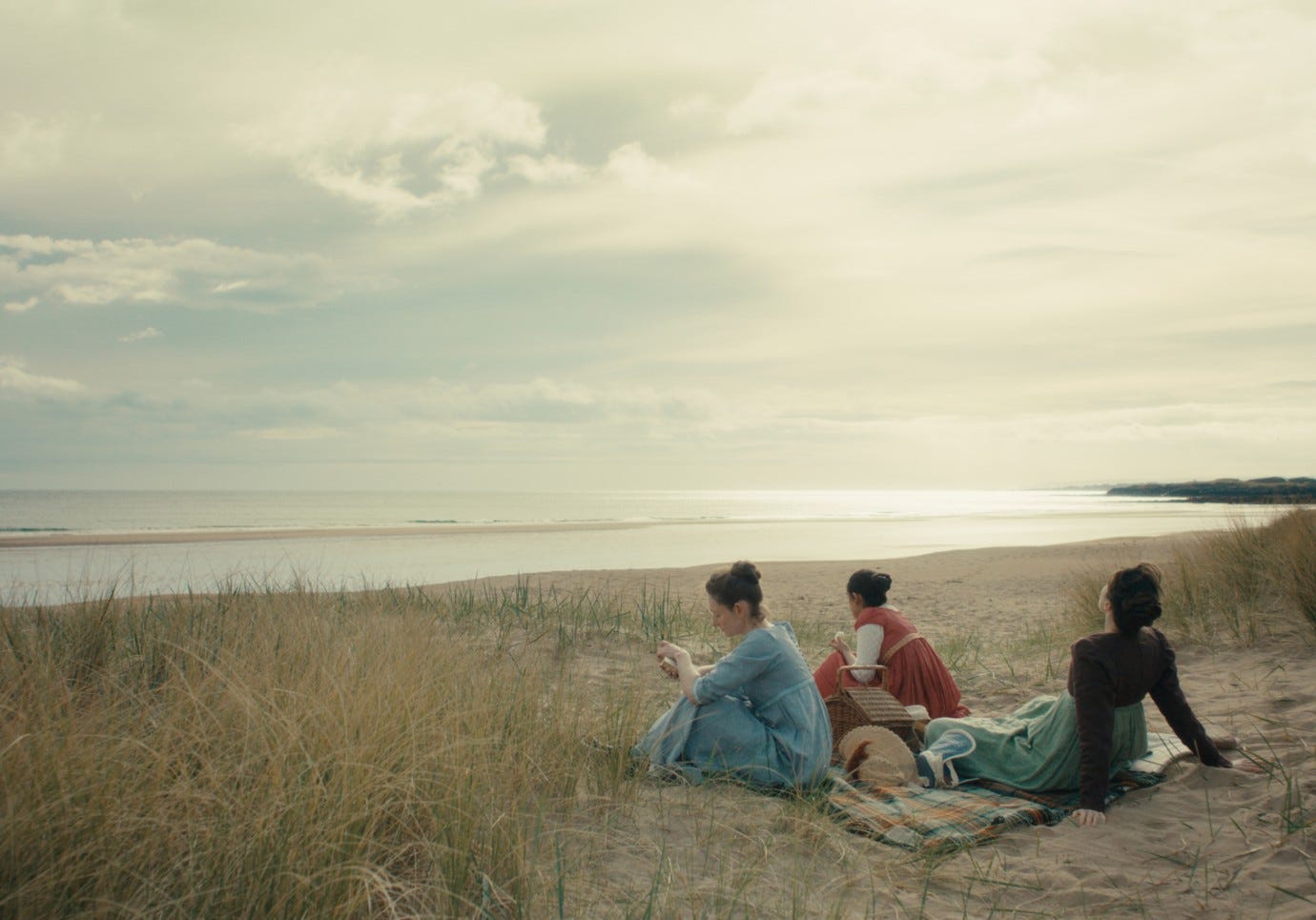
Having premiered at the Berlinale’s Panorama section, Sophie Heldman’s The Education of Jane Cumming (2026) takes the true story of Marianne Woods (Clare Dunne) and Jane Pirie (Flora Nicholson), previously documented by American lesbian historian Lillian Faderman in the novel Scotch Verdict, and refreshes it for the screen.
The premise? Edinburgh, 1810: Illegitimate India-born Jane Cumming (Mia Tharia) is sent to a boarding school by her aristocratic grandmother, Lady Cumming Gordon (Fiona Shaw). Finally finding belonging amongst the wisdom and openness of Woods and Pirie, Cumming concocts the rumour that her teachers are lesbian lovers.
The film is rendered exceptional by Heldman’s sensitivity to the characters’ complexities. For half the film, the story is considerate of Jane’s perspective, tracing her movement from alienation and silence towards belonging and comfort. In a breakthrough debut performance, Mia Tharia’s eyes glimmer with both raw honesty and the promise of an exciting career, allowing us to feel the warmth of a new life Jane desires. Simultaneously, Fiona Shaw, as always, shines in quiet stoicism and the minute portraiture of her face’s gestures. Her character’s snobbish and difficult attitudes are made human. The film therefore does not seek to villainise any character, but to provide a lens of empathy.
When Jane eventually betrays her trusted teachers, the film allows us distance from her. In doing so, all four women are made equal for us to consider the societal and intersectional pressures weighing on their difficult decisions. With few male characters, the film allows the women to express internalised patriarchal viewpoints: the mothers and guardians see the point of educating women to the extent of “helping [the girls] with the finances” at home, juxtaposed with the teachers’ liberal philosophies of developing curiosity and “inquiring minds”. The girls are referred to as “scholars.” Heldman finds reasons for the women’s actions through the circumstances of the time period. By the film’s end, where each woman ends up worse than before, we are reminded of the social values that enable such tragedy. Heldman finds few faults in the individual characters.
Already brimming with admirable qualities, the film is made especially exceptional with its intersectionality. It grapples with larger ideas of homophobia, race, class and imperialism. These further the aforementioned patriarchal circumstances by providing further perspectives that complicate the real story. Watching today amidst more intersectional discourse, it feels as if we finally can get closer to the full objective capital ‘T’ Truth of a scandal like this.
It is straightforward filmmaking when a work seeks to discover the truth. It is much more respectable when a film decides to chart a new path in understanding why the truth is what it is instead. Across its intentions, competent filmmaking and awe-inspiring performances, The Education of Jane Cumming cements itself as a brilliant work, inspiring us, in all our unimaginativeness and ignorance, to desire deeper truths.
The Education of Jane Cumming will be screened on 17 October 2026 at Filmhouse as part of the German Film Festival.
Written by Daryl Cheong, edited by Phyllis Chan