

In Fatih Akin’s 2025 historical coming-of-age film Amrum, the complexities of war and ideology are explored through the eyes of a 12-year-old boy. At the beginning of the film, it announces itself as “a Hark Bohm film by Fatih Akin.” The film is based on the personal experiences of writer Hark Bohm, who is also known for his long-time collaboration with New German Cinema filmmaker Rainer Werner Fassbinder.
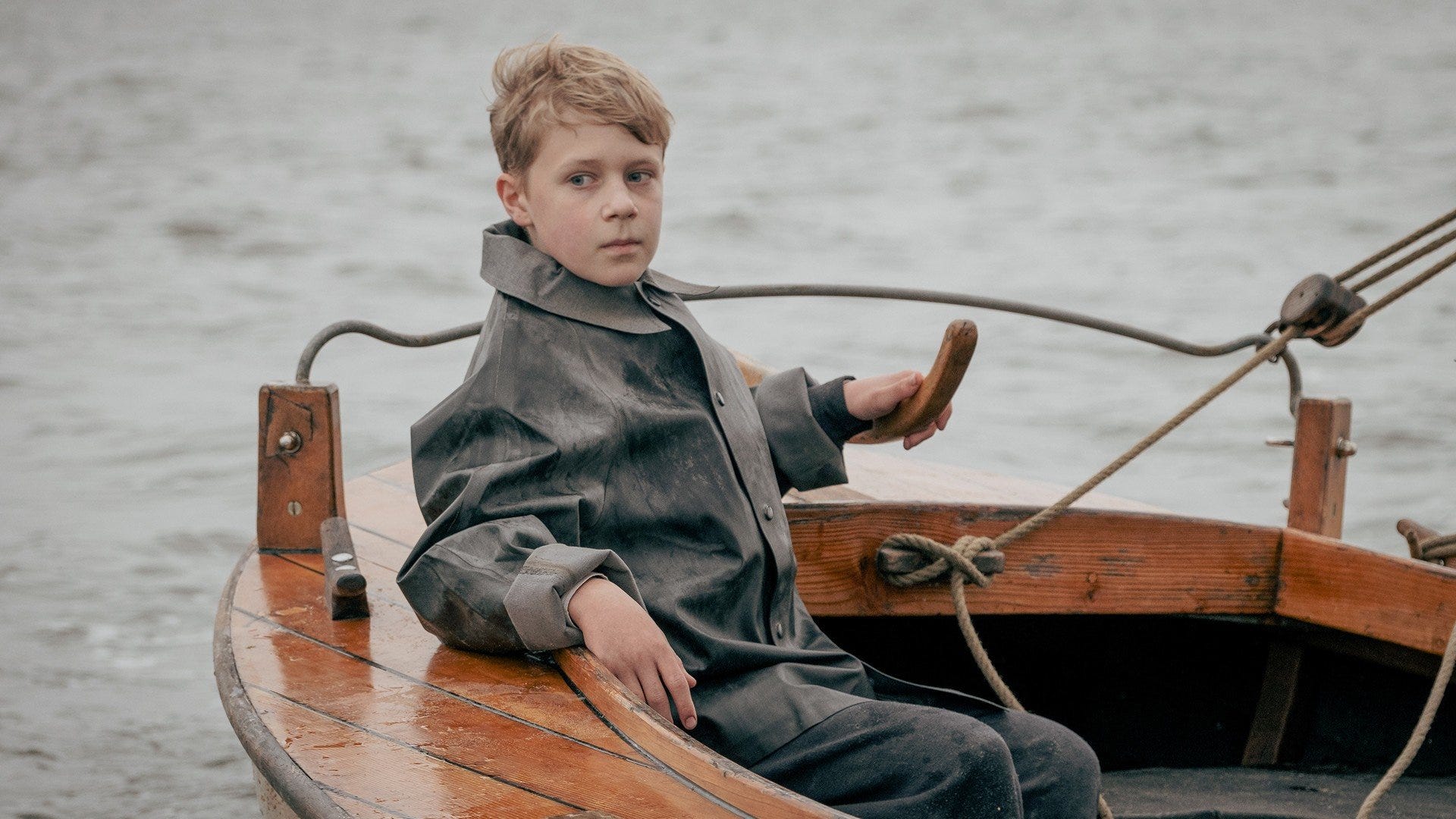
The film follows 12-year-old Nanning Bohm as he navigates the cruel reality of the final days of the war. Nanning’s father is an SS lieutenant colonel fighting in England, while his mother, Hille, is a staunch supporter of the Nazi regime. After their house in Hamburg is bombed by the Allies, the family moves to Amrum, an island off Germany’s North Sea coast. There, Nanning becomes the family’s provider. He works in the potato fields, helps with seal hunting and eviscerates rabbits in exchange for food, as the island struggles under severe wartime rationing.
Through the eyes of a child, questions of identity and belonging slowly unfold on screen. Nanning is bullied by his peers, who are native Amrumers, constantly mocked as a “mainlander” because he comes from Hamburg. The hostility of his new acquaintances becomes a barrier to his entry into the island’s social circle. Yet his exclusion is rooted in more than a simple social difference. Nanning arrives on Amrum carrying an identity shaped by his family, his class and the ideology they have embraced—an identity that becomes increasingly unstable as the war draws to an end. The bitter consequences of the war have left everyone struggling for survival, while Nanning’s implicitly more privileged social background exposes the class divisions that persist even amid collective hardship.
The film’s exploration of a fractured identity during wartime does not stop at class. The harsh realities Nanning faces are not merely external, but psychological and internal. Hille’s increasingly disoriented state, brought about by the collapse of the war and the ideology she once believed in, drags Nanning into an even harsher reality. His search for ingredients to make bread for his mother becomes, in turn, a search for his own place in a world whose moral framework is collapsing around him. As a child raised within a Nazi family, how is he supposed to distinguish right from wrong when the adults around him have already lost their bearings?
Amrum resists the temptation to reduce its story to a simple opposition between good and evil, or right and wrong. Instead, through the perspective of a child, Akin allows us to witness the collapse of an ideology and, more importantly, the ways in which that collapse crushes the people caught within it. Nanning is neither simply a victim nor merely an inheritor of his parents’ ideology; he is a child attempting to make sense of a world he has not yet learned how to judge.
Unlike Fatih Akin’s previous films, this tender yet cruel work is not merely an examination of war and its legacy, but also an invitation to reconsider our own position in the present. In a world where wars continue to rage, and where every discourse can so easily be reduced to two opposing sides—an absolute “us” and “them”—how should we examine our own position? Is there still a grey area for us to inhabit?
Amrum does not rush to impose a definitive moral judgement upon the past. Instead, through its poetic cinematic language, it explores the grey zone between good and evil. Nanning, wandering through this grey area, may also be a reflection of Hark Bohm himself—who, in his twilight years, looks back upon the past and, even after all these decades, still carries the bewilderment of that young boy as he gazes upon the world.
Amrum will be screened on 9 October 2026 at Filmhouse as part of the German Film Festival.
Written by Lee Peng Ming, edited by Phyllis Chan