

Nelson Yeo’s The House on the Moon meets its first critics at Locarno; Edinburgh introduces a new crop of films; and Christopher Nolan’s The Odyssey continues to provoke arguments about adaptation, ownership and who gets to interpret Homer.
1. Reviews of Singapore Films
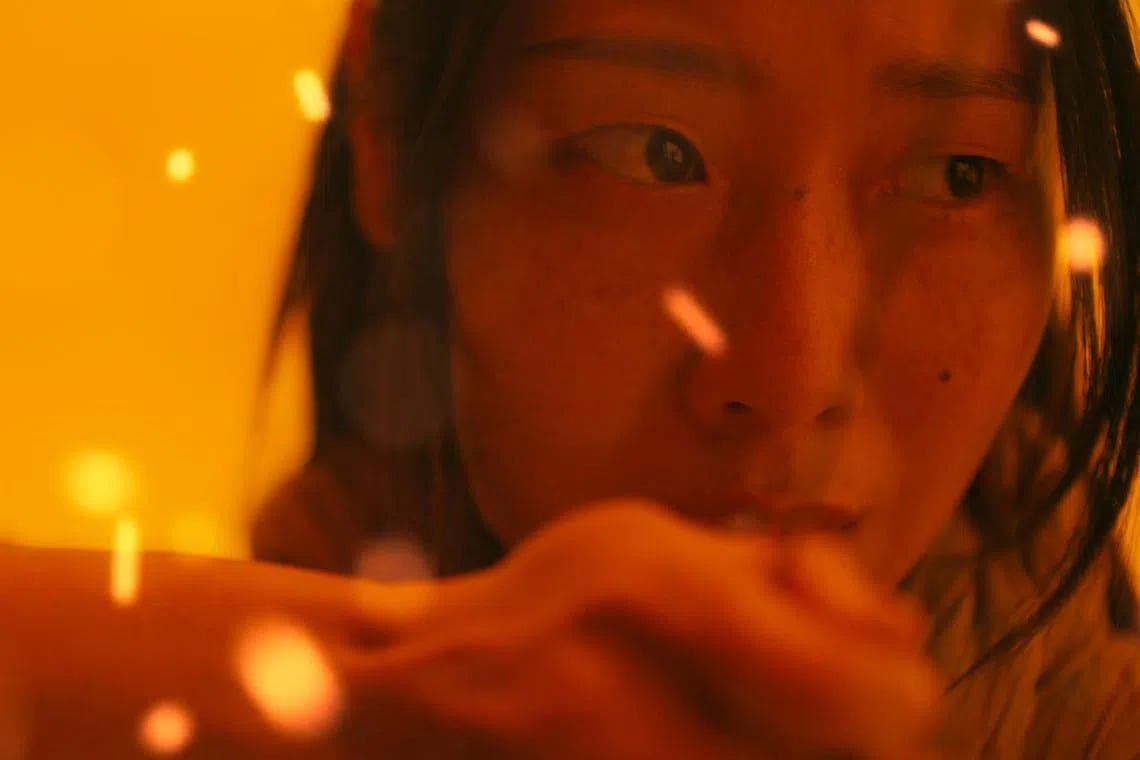
The House on the Moon
The House on the Moon — Nelson Yeo [Locarno ’26 Review] — In Review Online
Morris Yang reads Nelson Yeo’s reworking of Chang’e and Hou Yi through the distance between myth and mortal feeling, finding something productive in the film’s refusal to make its mythology entirely legible. One of the more theoretically engaged responses to Yeo’s second feature.
‘The House On The Moon’ review: Singapore’s Nelson Yeo turns Chinese moon goddess myth into ponderous flight of fancy — Screen Daily
Amber Wilkinson is considerably less convinced, admiring the film’s scale and visual ambition while finding its storytelling difficult to penetrate. Is the film’s opacity part of its mythology or an obstacle?
House of the Moon (2026) by Nelson Yeo Film Review — Asian Movie Pulse
Panos Kotzathanasis similarly finds Yeo’s wuxia-science-fiction collision difficult to follow, occasionally tipping into pretension, while still recognising the ambition behind it.
2. Latest Criticism from Festivals: Locarno & Edinburgh
Locarno Film Festival 2026 — Dispatch 3: Object a, The House on the Moon, Brave New Love — In Review Online
In Review Online closes its Locarno coverage with Objet a, The House on the Moon, Brave New Love, O Jacaré and Our Time Will Come.
EIFF 2026: The Arrow at Rest at Every Instant of its Flight — The Skinny
Jamie Dunn gives Theodore Schaefer’s 16mm New York triptych five stars, locating much of its energy in Gus Birney’s three different performances.
EIFF 2026: Pretty Babies — The Skinny
Ross McIndoe is taken by the dreamier stretches of Tyler-Marie Evans’ tale of two teenage girls heading towards Hollywood, but less by the film’s use of sexual assault to push its story forward.
EIFF 2026: Snapshot — The Skinny
Snapshot imagines itself as a Victorian found-footage film, supposedly uncovered alongside wax-cylinder recordings that turn it into cinema’s first talkie. Jamie Dunn finds the conceit imperfect but the attempt thrilling.
EIFF 2026: I Want Your Sex — The Skinny
Gregg Araki returns to sex, power and queer provocation; Katie Driscoll finds a film that talks incessantly about sex without being especially sexy.
3. Spotlighting New Titles
Sweet Milk Lake review — a rewarding film about a trans man mistaken for his twin brother — The Guardian
Harvey Zielinski uses the familiar homecoming drama for something stranger: Jake returns to his hometown and is mistaken for his twin brother, but chooses not to correct anyone. The film apparently works because it resists turning transness into a single revelation, allowing memory, family and recognition to remain messier.
Waves Turn review — the exhausting, joyful, boring, wondrous realities of new motherhood — The Guardian
Josephine Ahnelt films five new mothers on 16mm, interested as much in boredom, repetition and ambivalence as the more photogenic pleasures of parenthood. The home-movie texture becomes a rebuttal to the composed image of motherhood inherited from art.
Mad Rush review — an intricate phone scam isn’t quite enough to drive this very Melbourne movie — The Guardian
Luke Buckmaster is less interested in whether Maddelin McKenna turns a phone scam into a convincing thriller than in how decisively the film belongs to Melbourne. A useful defence, with reservations, of films whose geographic specificity may ultimately matter more than their plot.
The End of Oak Street film review — Financial Times
David Robert Mitchell moves from It Follows and Under the Silver Lake to suburban dinosaurs. The question running through much of the criticism is whether this is merely Spielberg pastiche or whether Mitchell can smuggle his own strangeness into the machinery of an Amblin blockbuster.
Toons Have Seldom Been Loonier Than in Coyote vs. Acme — The New Yorker
Justin Chang finds the film considerably better than its near-erasure by Warner Bros. might have suggested. Ironically, a story about Wile E. Coyote taking a giant corporation to court now carries another story around with it: the corporation that nearly prevented audiences from seeing the film at all.
4. Discourse of the Week: Who Owns The Odyssey?
Christopher Nolan’s The Odyssey has been out for a month, but criticism around the film has moved beyond whether it is simply “good” or “bad”. This week, the more interesting disagreement was over adaptation itself: what fidelity means, whether classicists have special authority over Homer, and what happens when an ancient text becomes mass culture again.
The Odyssey Belongs to All of Us — Dissent
Sukaina Hirji pushes against Emily Wilson and other classicists who judge Nolan primarily against Homer, arguing that the film is engaged not only with the original poem but with nearly three millennia of people interpreting it. The more provocative argument is about authority: why should scholars determine which conversations with Homer count as legitimate?
Why Homer will outlast us all — Financial Times
The FT similarly treats Nolan as another participant in an extremely long history of people rewriting Homer, from Virgil to Joyce. Fidelity is perhaps the wrong measurement for a story whose cultural survival has always depended on mutation.
The Cost of Returning to Oneself — Shrine Magazine
Tatiana Eva-Marie hates Nolan’s film, then does something more interesting than continuing to argue about it: she builds a four-film programme around nostos, or homecoming, through The Best Years of Our Lives, The Last Flight, The Burmese Harp and Rolling Thunder.
“I felt so inspired”: Guardian readers on trying Homer’s epics after seeing The Odyssey — The Guardian
Perhaps the most consequential result of all the fighting over fidelity: people are reading Homer. The film has driven readers towards the poem, competing translations and other retellings.
5. Beyond Words
How Chinese Movies Depict the Rest of the World — Accented Cinema
Accented Cinema reverses the much more familiar conversation about how Hollywood represents Asia: how does Chinese cinema imagine everybody else?
Summer Blockbusters Joanna Coles Is Obsessed With — Obsessed: The Podcast
The Odyssey discourse continues in audio, this time shifting attention from textual fidelity towards the racial backlash around Lupita Nyong’o’s Helen. The discussion argues that the film’s more interesting problems lie elsewhere—including an overstuffed star cast and uneven chemistry—rather than in a mythical Greek woman being played by a Black actor.
This week’s Criticism Digest is made free for all readers. Future Digests will be behind a paywall. Consider subscribing to ‘Reserved’ for more pieces like these.