

As devout cinephiles do following astounding screenings, I doomscrolled on TikTok. By pure coincidence, after watching Baby Jackfruit Baby Guava (dir. Nông Nhật Quang, 2026), a video pops up: the difficulty of being a two-cultured child in therapy, grappling with the collectivism of Asian cultures and the individualism of Western liberalism. While reductive, the binary is helpful for examining how individuals of Asian descent negotiate the competing demands of societal obligations and personal autonomy.
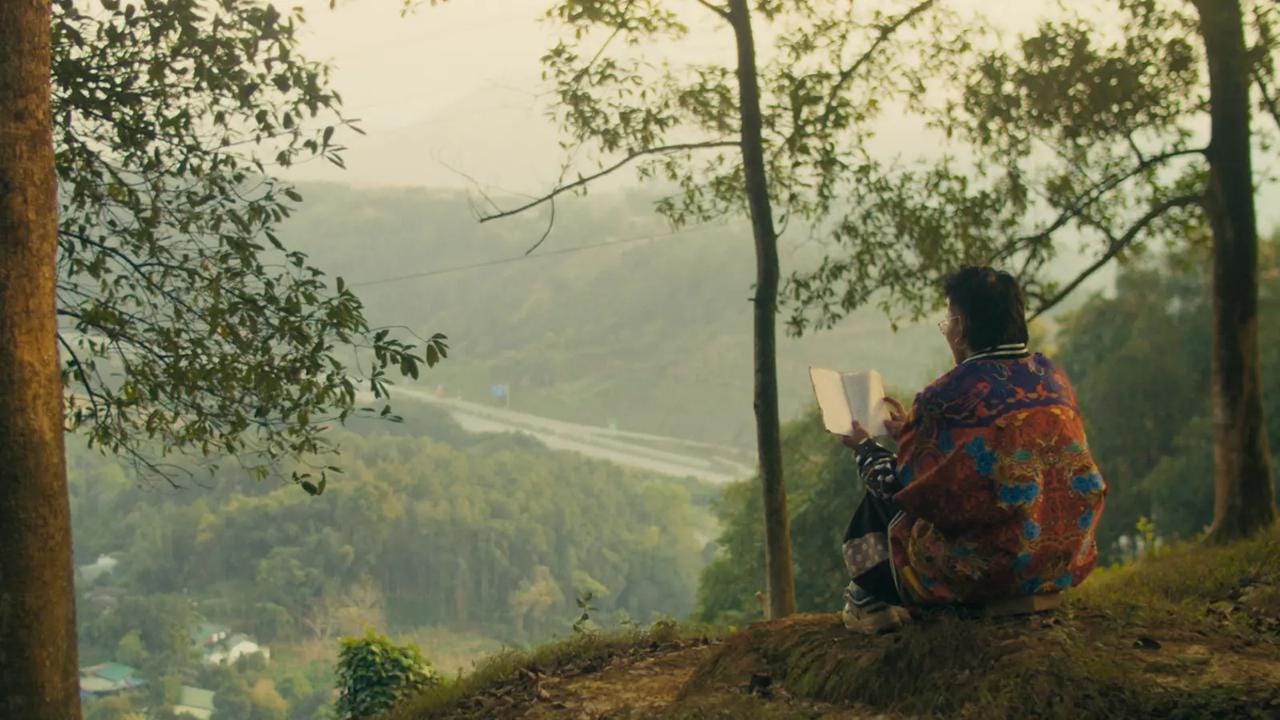
This is core to Nông’s documentary, turning the lens to himself and his family. Despite being a “top tier power bottom serving cunt in the clubs” of Hanoi, Nông adopts a different persona in his hometown of Lao Cai, where he was bullied in school for his queer identity and had to distract others (and perhaps himself) with academic success instead. But this is not a straightforward film about queerness: just as the director argues that everyone is simultaneously abnormal and normal, ‘queer’ is less a sexual orientation and more an ideology for a different life. Nông therefore queers the depiction of family.
Nông’s tender lens empathises with the complexities of his family members. Mai, his sister nine years senior, was diagnosed with schizophrenia. She had lost the ability to “find beauty”, symbolised by her derelict photography hobby. The film charts her unexpected pregnancy amidst “illness”, and the eventual birth and upbringing of the titular Baby Guava, a nickname for her son.
Mai and the director are often critical of their mother, Cuc. Structurally, the film also does not develop her persona further. It is only midway through that Nông, as filmmaker, reveals that Cuc had given up on her career, despite being on the cusp of a leadership position, to take care of Mai. This revelation complicates our understanding of Cuc, whose frustrations and joys, often simultaneous and contradictory, afford her the same complexity and humanity that the film extends to Nông and Mai.
Through diary entries, photographs, and call recordings, family archives become an exuberant form for storytelling. Simultaneously, they reveal layers of humanity. Cuc’s diary from younger days confesses: “The future me who looks back on these youthful years, who would I be? Oh, I hope everything goes well.” More than simplifying the profiles into respective family roles, these forms realise the individual. Precisely within this self-actualisation (for both profile and audience), the tensions with family and commitment become all the more pronounced and heartfelt.
Demonstrative of Nông’s mature filmmaking is perhaps a mid-point metacinematic moment where he looks into the camera and articulates the difficulty of being a director making a film about his family whilst dealing with his emotions, and beckons the audience to forgive him “if [he is] not being ethical. [He] hides behind the camera, that’s [his] power.” Film’s artifice delineates the line between documentarian and subject, akin to the same line between individual and family.
If queerness is less an identity and more an ideology, then the ability to hold binaries and contradictions in simultaneity affirms our abnormalities. The film, similarly, allows for both emotional deluges and light brevity. In the same breath, as Nông’s mother attends a queer event and finds other well-meaning but charmingly confused mothers, unsure if homosexuality means the child is the “man or woman in the relationship,” Nông’s father also meets his boyfriend virtually and without prejudice, says: “Tell him everything’s fine. What time is it in the US?”
Tensions of self and family plague our Asian selves ceaselessly, and Nông, Mai, and Cuc are as similar as they are different. In holding all these truths as contradictory as they are comforting, the film suggests that perhaps everything can be fine.
Written by Daryl Cheong, edited by Phyllis Chan