

In Singapore Panorama Programme 3, the theme of “Borders / Barriers” extends from the public sphere into the private, as filmmakers explore boundaries on their own terms. Yet, rather than offering a definitive understanding of what constitutes a border, the programme invites further questions about the term itself. This review does not attempt to account for every kind of border represented in the films. Instead, it offers a more personal, instinctive response to the questions and tensions that emerged from watching them.
What happens when a seven-year-old child suddenly enters the lives of a father and son? Jacob Tan’s Son of A re-examines the very definition of family. What, after all, constitutes a family? And how might the dynamics within a household shift when an outsider enters the picture?
The film follows a seven-year-old Vietnamese boy who enters the lives of his biological father and half-brother, having never been acknowledged by his father as part of the family. Unfortunately, ‘Vietnam’ itself is reduced to a series of symbols: Vietnamese bánh mì, Vietnamese migrant workers, and a homeland to which one cannot return. Here, the film gestures towards several borders: Singapore and Vietnam, adults and children, and the boundaries defined by blood ties. Regrettably, its exploration of these boundaries remains superficial and insufficiently developed.
Daryl Cheong’s Dazing Gaze is imbued with a distinctly watery, almost elemental sensibility. It offers a tender gaze at contemporary gay hook-up culture. As sexual desire surges between two people, what remains once they have reached the other shore? Once we arrive, we may be able to shed our identities, but are we merely escaping one cage for another? While some parts of the film adopt experimental approaches, much of its expression remains rather literal. Its central narrative is clear and emotionally coherent, flowing with a certain fluidity, yet some of its dramatic turns feel underdeveloped and occasionally forced.
Lionel Seah’s Her Silence is a profoundly quiet film, yet beneath its stillness lies a current of unspoken turbulence. The tension between mother and daughter is ineffable, yet strangely harmonious. There is also the distance between a daughter preparing to settle abroad and her parents, who are merely visiting for a few days.
The director employs an exceptionally restrained visual language to capture this quietness. Perhaps, in our own lives, we too gradually drift away from our parents. The distance and estrangement that emerge between us do not necessarily mean that we love them any less. Rather, we have begun to cultivate worlds of our own. We move from sharing a single bubble with our parents to gradually forming separate ones of our own. This, perhaps, is what growing up means. The film also resonates with Subterranea (dir. Ash Goh Hua, 2026), featured in Singapore Panorama Programme 2, as though the two were quietly in conversation with each other.
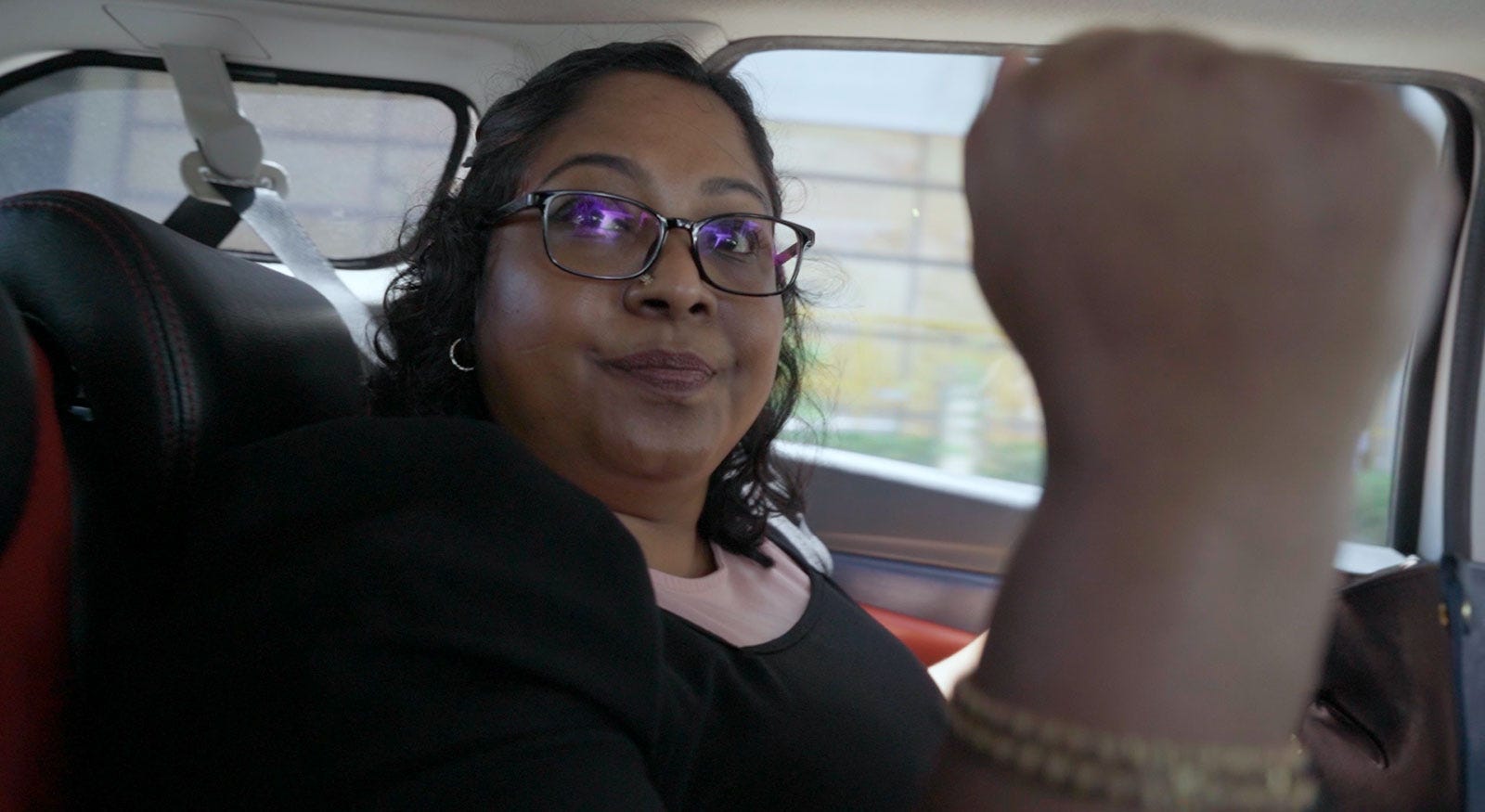
Nicholas Tan’s What Remains at Dawn is a remarkably solid documentary. In Singapore, executions are typically carried out at dawn, as the sun rises and two worlds are irrevocably separated. Following the perspective of Pannir Selvam Pranthaman’s family, the film chronicles how the family of a death-row prisoner fights for his life. Its linear narrative structure offers a steady, measured account of the events. While this approach is solid and assured, it also leaves little room for surprise. The film’s opposition to the death penalty runs throughout, though its perspective occasionally feels somewhat one-sided. There is no doubt that we need more films like this to spark public discussion. I hope this film will pave the way for more documentaries of its kind to emerge.
Written by Lee Peng Ming, edited by Phyllis Chan