

Introducing the FreshTake! programme, co-curator EXYL remarks that “more than a finished film, it’s so rewarding to see somebody work through a problem.” Rather than privileging the finished work, EXYL proposes an appreciation of student filmmaking as a process of artistic discovery. The films, then, are not merely evaluated for their accomplishments, but for the potential ideas and cinematic sensibilities they reveal. At the post-screening conversation, the six directors were able to further expand on their curiosities.
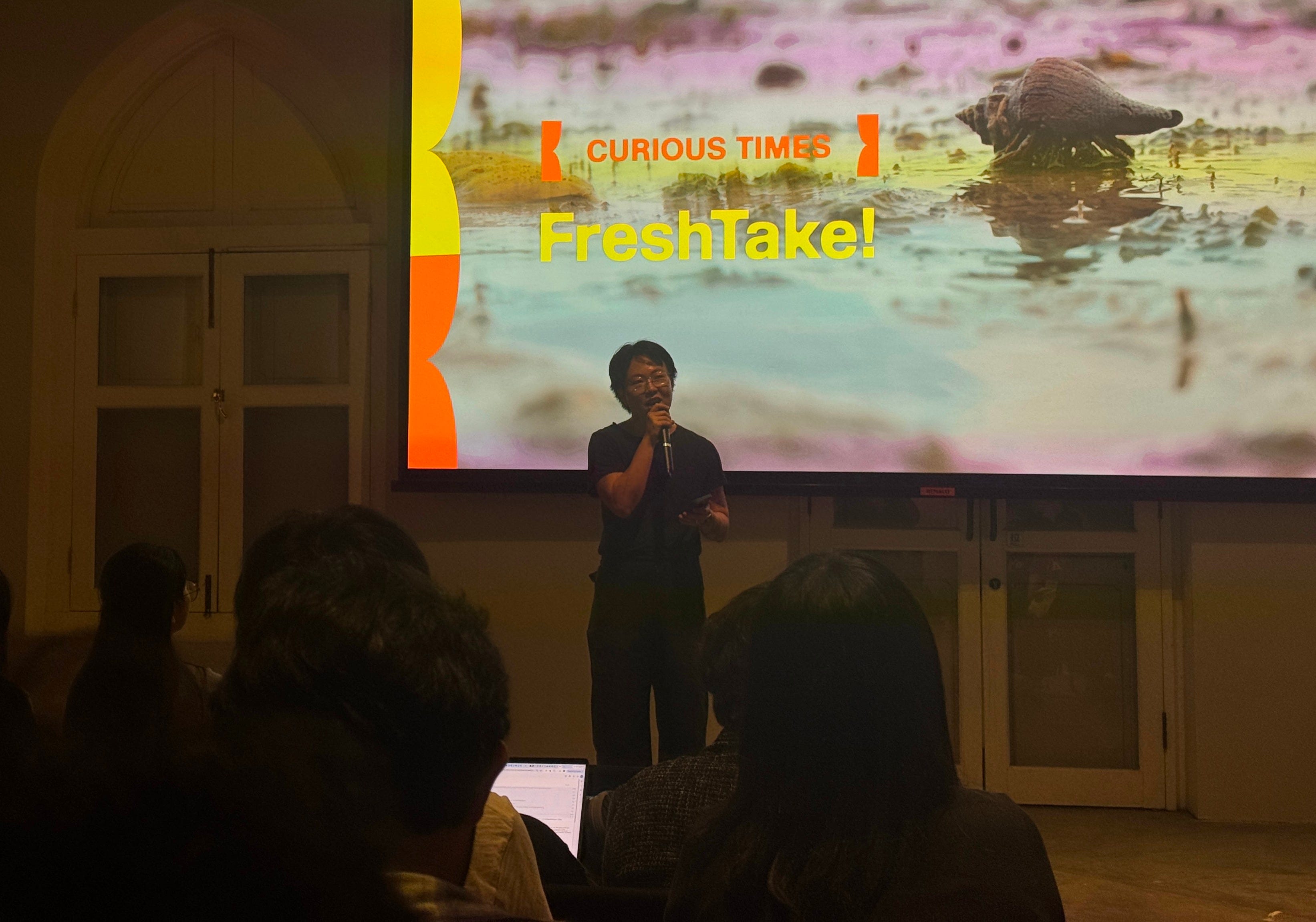
As expected, the emerging filmmakers reveal how practical challenges, not a lack of ideas, are the real constraint. Choy’s prospective profiles rejected them since they were “being pursued by the military junta”, Louise’s “talent fell sick”, and Mehrotra had to shoot for 16 nights. Production constraints, while not exclusive to students, naturally become a chokepoint for larger ambitions.
Yet, where artistry emerges is the creativity with which these constraints are negotiated. For Theodas, her process is “Instagram filters and CapCut.” She uses her phone since she doesn’t own a camera. With such material limitations, Theodas’s extensive experimentation proves that outstanding works are those that accept and challenge constraints. She remarks, “I just layer [elements] and layer and layer until it becomes a shape. A lot of times it’s what I’ve never seen before, and that’s exciting.”
Being an emerging filmmaker also does not limit one’s ambition. Lim, speaking on making Kamikaze Lizard, enrolled to realise a specific genre-bending idea: “If [he] didn’t make a film like this, [he would] regret it for the rest of [his] life.” Mehrotra’s first-time in filmmaking was seaward. He shared that much of the impetus came from his dissatisfaction with conventional environmental documentaries in privileging human narration and therefore voices over non-human ones. The strength of this remark highlights Mehrotra’s unique and outstanding ambition that traverses the filmmaking or artistic ones of other filmmakers, and into questions of politics and ethics.
What was remarkable was the markedly different sources of artistic influence, revealing the diversity of cinematic sensibilities that challenge established film traditions from this crop of filmmakers. Lim drew from the Japanese superhero franchise Kamen Rider (much to the pleasure and exclamation of support from the audience. One Objectifs photographer even punched his fist into the air), and Theodas was inspired by experimental animator Victoria Vincent, better known by her online handle vewn, who uploads her short films to YouTube.
Both Louise and Michelle identified Singaporean filmmaker Giselle Lin as an inspiration: Louise for the “analogue medium and silence” and Michelle for the cinematography. It is heartening that Lin is an influence, given that all three filmmakers come from LASALLE. Yet, in confessing this inspiration, Louise and Michelle risk drawing attention to the potential derivative nature of their films’ uncanny similarities to I look into the mirror and speak to myself (2023) and Time Flows in Strange Ways on Sundays (2021), respectively.
Together, the six filmmakers demonstrate their keen perspectives and curiosities about filmmaking. Returning to EXYL’s opening remarks, the filmmakers prove that, driven by ideas, ambition, and unique inspirations, practical limitations are barely a consideration for them.
Written by Daryl Cheong, edited by Phyllis Chan